More than 10,000 farmers to receive DSR training under the latest CSR project
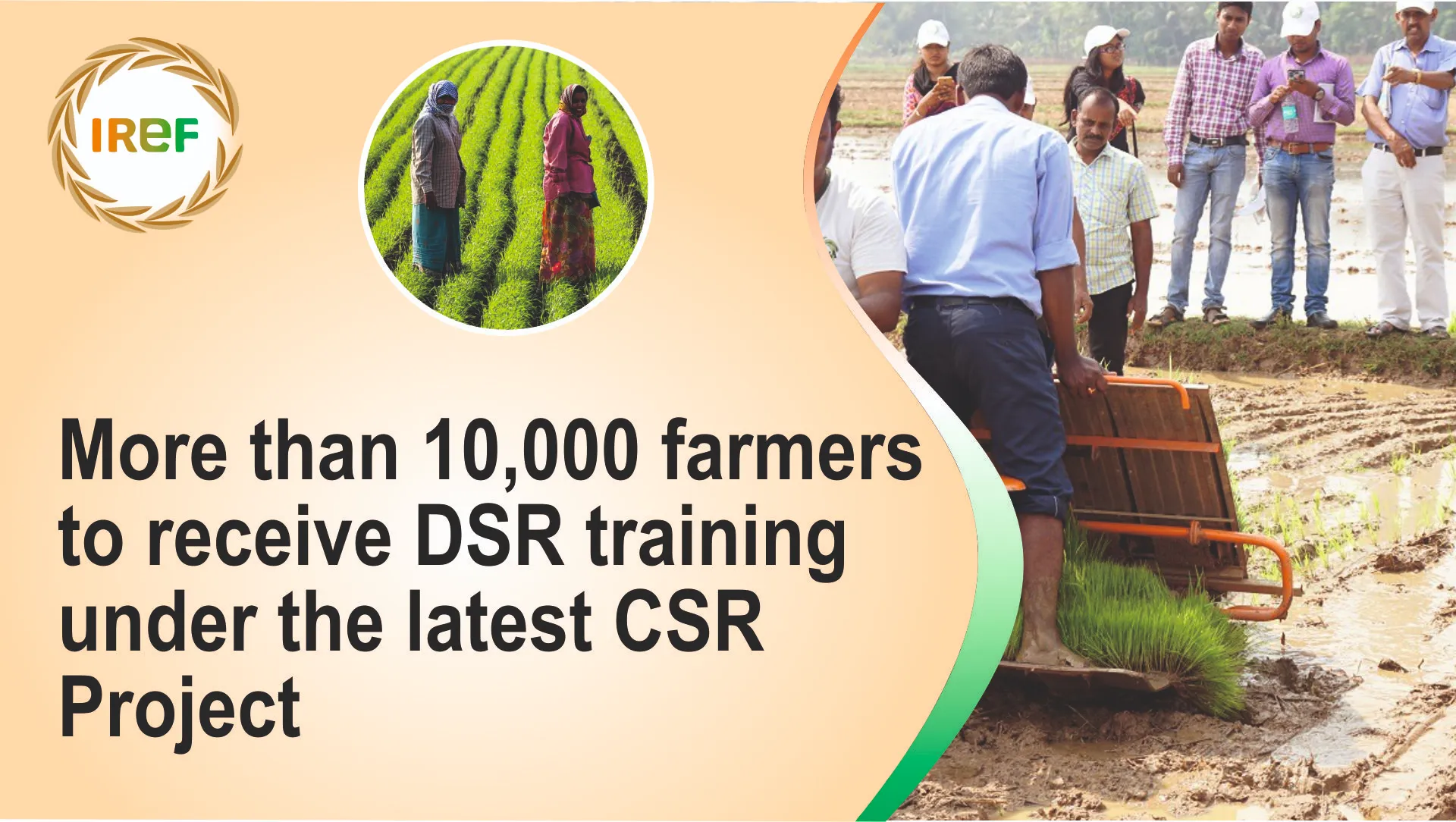
More than 10,000 farmers will receive training for the promotion of Direct Seeded Rice (DSR) for Sustainable Rice Production under the Corporate Social Responsibility (CSR) project launched by the Indian Institute of Rice Research (IIRR) with financial support from the SBI Foundation.
The director of ICAR-IIRR, R.M. Sundaram, said that they are conducting this training for farmers to encourage the Direct Seeded Rice for Sustainable rice production and increase farmers’ income in the districts of Khammam and Nalgonda based on the project. Additionally, around 500 selected farmers will also get field-level support, including seed support and pest management.
Apart from this, to assist the DSR training activities further, two vehicles were flagged off on Monday. The first one is Kisan Sarathi, which provides free transportation for farmers to attend trainings at ICAR-IIR and KVS, whereas the second one is Krishi Darshan, which is a mobile awareness campaign vehicle with Audio-visual aids and a trainer who would conduct village-level training sessions and provide soil testing kit support to farmers.
Not only this, but a rainout shelter with automated weather sensors has also been set up and inaugurated for training & research on Direct Seeded Rice production at the ICAR-IIRR Hyderabad campus. This rainout shelter was inaugurated to launch DSR-related research on agronomy, pathology, soil science, etc.
Certainly, the project offers field-level support to 500 farmers, covering seed support, pest management, and IoT-enabled Alternate Wetting and Drying (AWD) sensors in fields for keen monitoring of crops. Speaking at the event, Sanjay Prakash, Managing Director of SBI Foundation, stated that the foundation is committed to promoting sustainable agricultural practices under this CSR (Corporate Social Responsibility) project.
Notably, the project was informally launched during the last Yasangi season in these districts, and training will be provided to farmers over another year. Interestingly, IIRR is also working 12 paddy varieties appropriate for the DSR method.
Share this article
Article Info
Read Time
2 min read
Published
23 Jul 2025
Author
Megha Bajaj
Category
News