Top Rice News: Milling Charges, Asian Prices & Low-Emission Rice
Top rice news today highlights milling charges doubling in Odisha to prevent procurement disruptions. Vietnam rice prices Rise on El Niño Fears, whereas Bangladesh rice prices stay elevated amid the heatwave and Kerala emerges a hub for low-emission rice farming innovations.
Odisha Doubles Rice Milling Charges to Prevent Procurement Disruptions
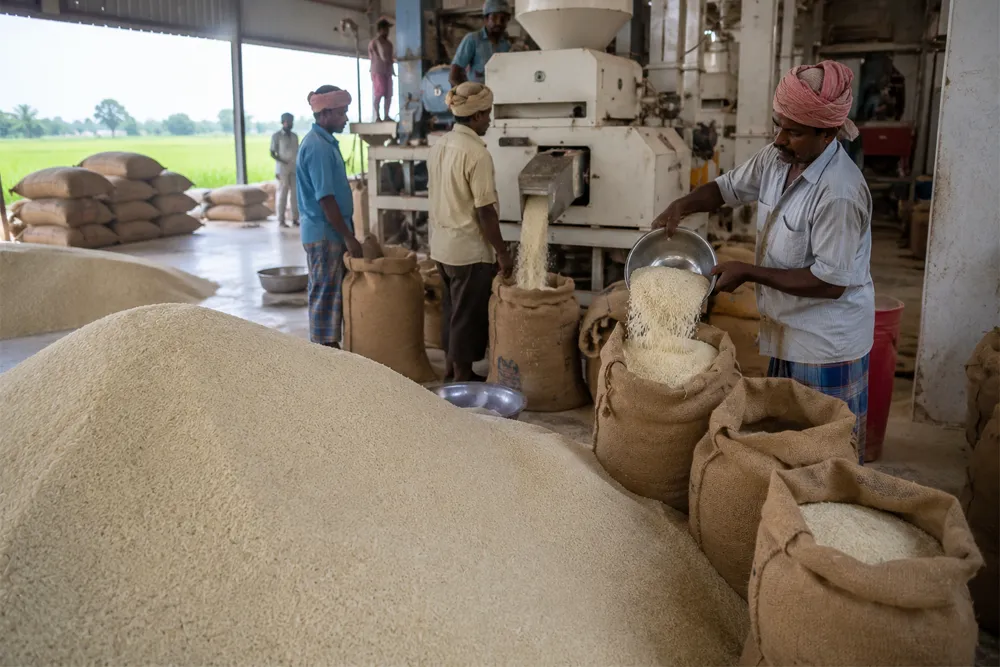
On Friday, June 5, Odisha Chief Minister Mohan Charan Majhi sanctioned a steep hike in rice milling charges to make sure smooth procurement of paddy from farmers in the state. Notably, the milling charge for parboiled rice was doubled from Rs 20 per quintal to Rs 40 per quintal. In addition, the milling charge for raw rice was surged from Rs 10 per quintal to Rs 20 per quintal. Moreover, the chief minister stated the hike will solve the problems of millers, allow smooth paddy procurement from farmers and boost the state’s food security system.
According to Officials, in the recent years, labour wages and fuel prices along with costs of other milling inputs have increased significantly. Despite this, milling rates in the state had not changed. Apparently, other states have much higher milling rates compared to Odisha. The revision will solve the long-pending demands from rice millers as the old rates were unviable because of increasing operational costs. The revised rates will be implemented with immediate effect amid the ongoing procurement season.
Vietnam Rice Prices Rise on El Niño Fears; Bangladesh Rates Stay Elevated Amid Heatwave
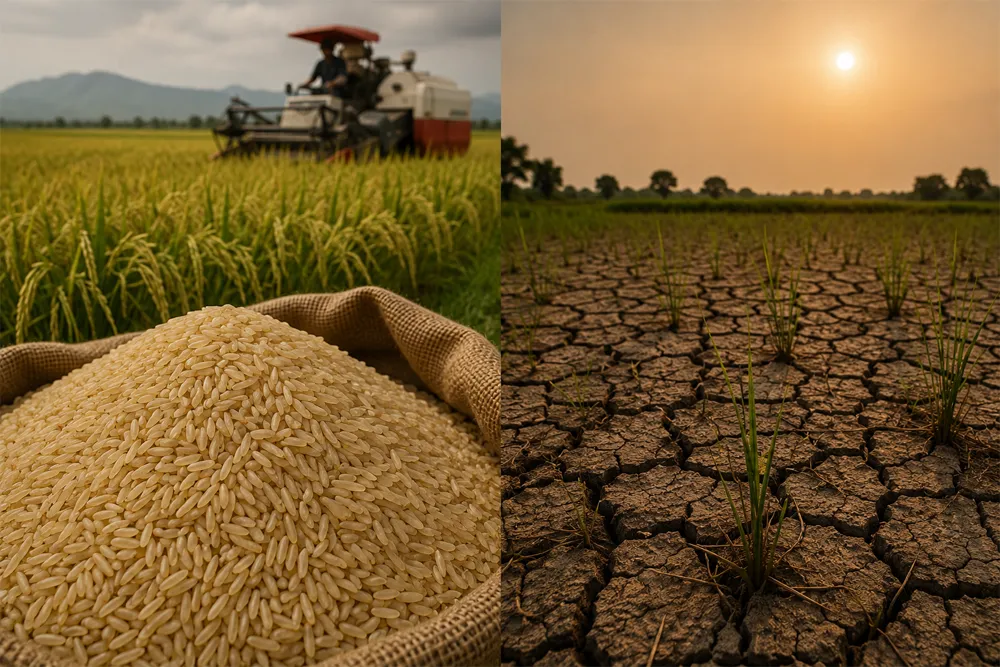
Rice prices in Asia have shown a mixed but firm trend this week amid growing climate-related concerns and uneven supply conditions in major producing countries. In Vietnam, export prices for 5% broken rice increased to nearly $415–420 per tonne, a rise from $405–410 a week earlier. Traders are cautious as the potential return of El Niño weather conditions raises fears of irregular rainfall, which could disrupt planting cycles and reduce yields in the coming months.
Notably, the domestic rice prices remain high due to an ongoing heatwave in Bangladesh that has affected crop health and increased pressure on local supply chains. Weather-related conditions have increased the concerns regarding food inflation in the country, where rice is a staple commodity. Meanwhile, Thailand’s rice market continues to remain relatively firm, supported by steady export demand and tight global supply expectations. Meanwhile, India has remained a significant force in the global rice market, with prices largely steady due to sufficient domestic stocks and strong procurement from government agencies.
Broadly speaking, the situation defines how climate variability, especially heatwaves and El Niño risks, is increasingly affecting global rice production, raising concerns about food security and price volatility in Asia and beyond.
Why Kerala Becomes a Hub for Low-Emission Rice Farming Innovations?
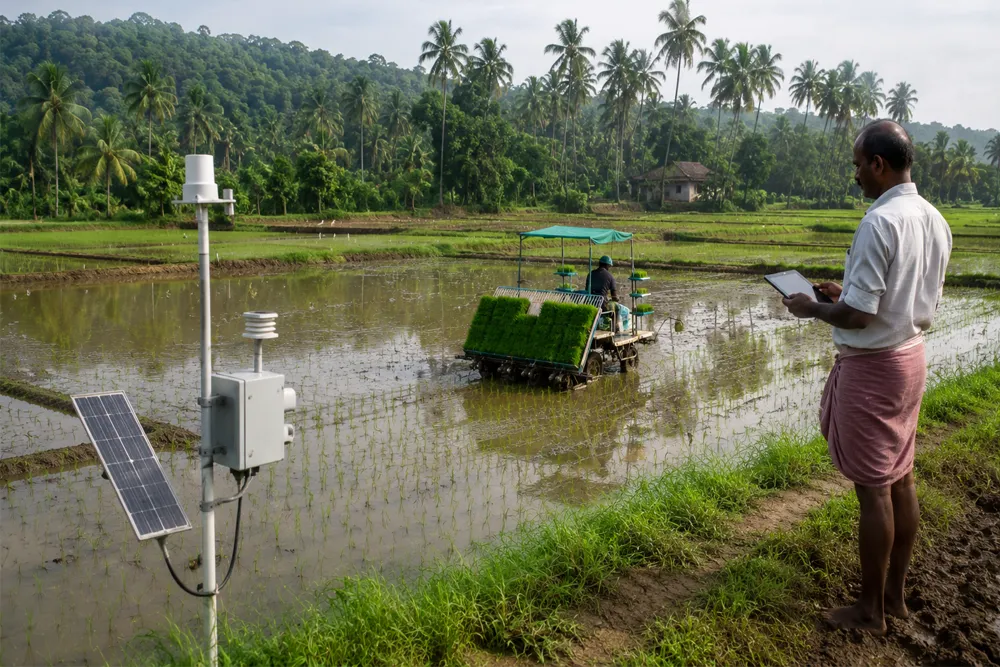
Kerala is emerging as a strategic hub for developing and increasing farmer-centred and data-driven low-emission rice systems through the project: “Technical Assistance to KERA in AWD - Catalysing transitions to Low-Emission Rice-based Systems in Kerala” (KERA-AWD). Notably, Kerala’s diverse landscapes, spanning coastal zones, midlands, and mountainous regions, offer the chance to evaluate how low-emission technologies and management practices can perform under changing ecological conditions. Palakkad and Thrissur, two of Kerala’s major rice-growing districts, are serving as the project’s field laboratories for generating evidence and supporting wider adoption of climate-smart rice technologies.
Additionally, this initiative is being implemented by the Kerala Agricultural University (KAU), International Rice Research Institute (IRRI), and Centre for Water Resources Development and Management (CWRDM). Not only this, but it is also supported by the Department of Agriculture, Department of Irrigation, and Padasekhara Samithis, a local collective of paddy farmers in Kerala, India.
IRRI and its partners have convened researchers, technical experts, project teams, and government officials since the preparations began for the upcoming rice cropping season. Farmer representatives review progress and align strategies in the project’s key areas of work, including landscape assessment, low-emission rice production, irrigation digitisation, greenhouse gas (GHG) modelling, payment systems, and institutional capacity building.
Share this article
Article Info
Read Time
4 min read
Published
6 Jun 2026
Author
Megha Bajaj
Category
Rice News