Japan’s Aid for Zimbabwe: Can Agricultural Equipment Improve Rice Production?
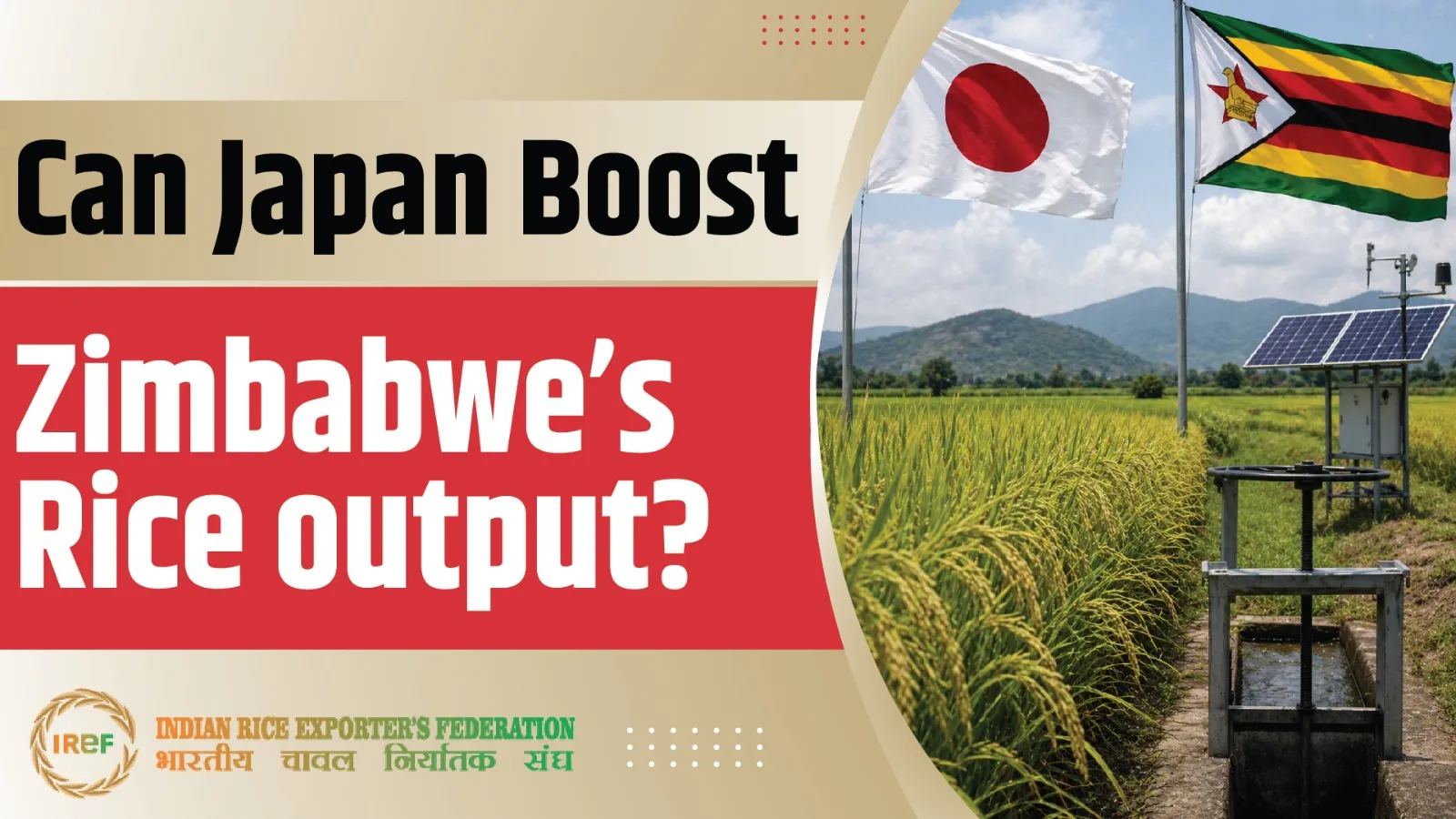
Recently, Japan has provided Zimbabwe with an agricultural equipment facility worth $2.6 million. Notably, this initiative aims to boost local rice production and reduce reliance on imports. The government strives to strengthen national food security. It is launched under the "Economic and Social Development Programme." This assistance from Japan government is expected to enhance the productivity of agricultural produce in Zimbabwe, modernise farming systems, and foster climate resilience. Whereas India is one of the largest rice producers globally. Zimbabwe’s focus is primarily on enhancing domestic capacity rather than competing at large-scale production levels.
Assistance of agriculture equipment comes at the juncture
The Japanese officials have stated that this assistance comes at a critical juncture, as the southern African nation intensifies its efforts to protect its citizens from climate shocks and global disruptions. To support progress in the agricultural sector, Japanese authorities will provide the African country with a grant of $2.6 million, under the Economic and Social Development Programme, to assist in purchasing farming equipment for rice yield. Moreover, it emphasised that escalating global conflicts and climate change are adversely affecting global food security, making it essential to improve food production systems through research and investment in new technologies. Japanese govt. further noted that there is a need for innovative solutions to enhance food production, leveraging the benefits of research. Finance, Economic Development and Investment Promotion Professor Minister Mthuli Ncube and Japan Ambassador to Zimbabwe Nobutaka Maekawa signed the exchange of notes. After this, Prof Ncube said: "The support was timely as the country intensifies efforts to cushion citizens from climate shocks and global disruptions”.
Assistance is meant to shield citizens from climate shocks & geopolitical developments
Japanese officials expressed their hope that this assistance would significantly aid in advancing rice yield technologies, thereby shielding citizens from the adverse impacts of climate shocks and geopolitical developments. Furthermore, the country observed that the African country is transitioning from rain-fed agriculture toward a more reliable, climate-proof farming system to ensure year-round food security. Meanwhile, the aid-receiving nation has stated that this program will boost productivity, strengthen food security, and support sustainable economic growth.
Younger generation prefers rice as a staple food
The Southern African country noted that:
- Weather volatility has been on the rise
- Growing trend in the younger generation to prefer rice as a staple food
- The majority of the rice consumed is currently imported
Under these circumstances, increasing local production has emerged as one of the most critical priorities for enhancing national food security. Notably, rice production in the African nation is currently at a low phase.
The country's annual rice consumption exceeds 200,00,000 tons
According to statistics, the country's annual rice consumption exceeds 200,00,000 tons. In this context, Zimbabwe is actively engaged in efforts to boost its domestic rice production. It is an endeavour in which Japanese authorities are assisted by an agricultural equipment facility. It is pertinent to mention that the Zimbabwean government has taken steps toward achieving self-sufficiency within the next five years by increasing production through the cultivation of advanced, low-water-intensive varieties, such as NERICA, with the support of Japan. In recent years, Rice consumption in Zimbabwe has surged as it gains popularity as an alternative to traditional staple foods like maize. Thus, the landlocked African nation aims to achieve self-sufficiency in rice production by 2026. Ultimately, the country is now set to receive assistance from Japan.
Share this article
Article Info
Read Time
3 min read
Published
29 Apr 2026
Author
Megha Bajaj
Category
News