Top Rice News: IREF Collabs With S&P Global Energy, Evaluates El Nino Impact
Top rice news Today highlights how IREF collabs with S&P Global Energy and evaluates the El Niño impact. Next, why is Italy’s rice-growing region in the Po Valley facing severe drought? The water supplies are reaching critically low levels after prolonged heat and limited rainfall. Rising supply concerns are supporting rice prices, even as global stocks provide some protection against potential disruptions
IREF Collabs With S&P Global Energy, Evaluates El Niño Impact

The Indian Rice Exporters Federation (IREF) has collaborated with S&P Global Energy to evaluate how El Niño could impact global rice production, trade and prices. Moreover, the study comes as concerns grow over weather-related risks to rice supplies, particularly in major producing regions of Asia. Global rice production is expected to decline by nearly 9 million tonnes in the 2026–27 marketing year. Undoubtedly, El Niño, higher input costs and geopolitical tensions adding pressure to the market. Not only that, but this collaboration aims to provide better insights into how changing weather patterns could affect production and market dynamics. For rice exporters and traders, the findings could help in anticipating supply disruptions, price movements and shifts in global trade flows. Since rice being a key staple for billions of people, a significant production decline could limit supplies and increase market volatility, making weather monitoring important for food security and trade planning.
Why Italy’s Rice Belt Faces $116 Million Drought Loss?
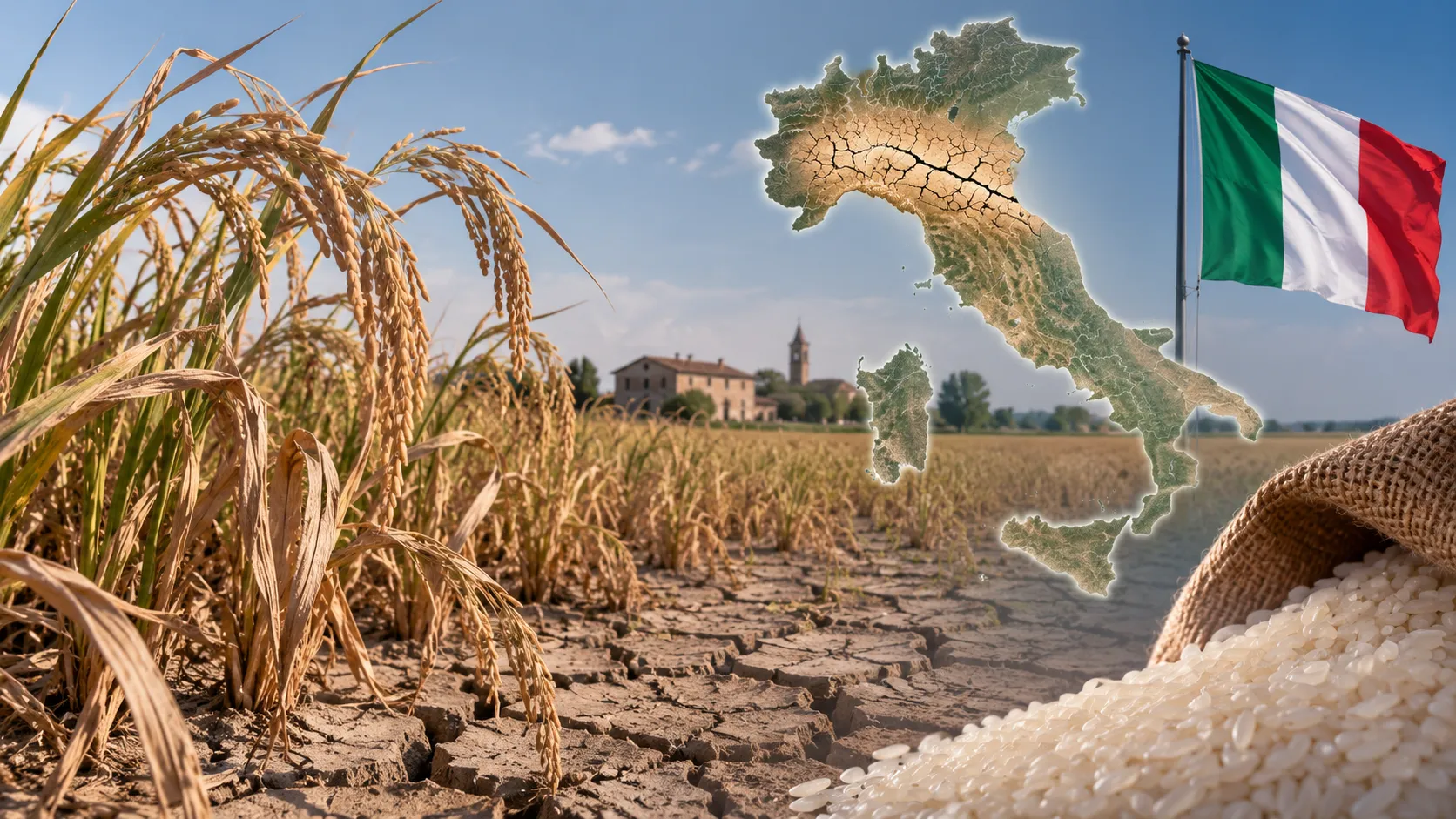
According to reports, Italy’s rice-growing region in the Po Valley is facing severe drought, as the water supplies are reaching critically low levels after prolonged heat and limited rainfall. Notably, Italy is Europe’s largest rice producer. It has about 235,000 hectares under rice cultivation, with most production concentrated in northern provinces such as Pavia, Vercelli and Novara. Besides this, farmers have been forced to abandon some fields and introduce water-rotation systems to safeguard the remaining crops. The Pavia rice sector alone could suffer losses exceeding €100 million ($116 million) due to drought, higher production costs, falling rice prices and competition from non-EU exporters. Moreover, Water availability is being supported partly by melting Alpine ice, but farmers fear this is not a sustainable solution. Proposed measures include winter flooding, new water-storage infrastructure and water farming,” which uses soil to store water for dry periods.
US Rice Output Rises, But Tight Stocks Keep Prices Supported
The USDA has raised its forecast for U.S. 2026/27 rice production to 158.4 million cwt, an increase 5.1 million from the previous estimate, mainly due to a larger harvested area. But average yields are expected to drop by 102 pounds per acre to 7,644 pounds. Moreover, higher production is lifting domestic use to 148 million cwt and ending stocks to 36 million cwt. Despite the rise, inventories remain 33% below last year, limiting downward pressure on prices. The USDA kept the season-average farm price at $14.90 per cwt, well above $12.50 last season. Globally, rice supplies and consumption have risen slightly, whereas trade remains unchanged at 62.8 million tonnes. Generally, tighter U.S. inventories are expected to keep rice prices supported despite higher production.
Share this article
Article Info
Read Time
3 min read
Published
13 Aug 2026
Author
Megha Bajaj
Category
Rice News