Top Rice News: Why Are Indian Rice Export Prices Rising?
Top rice news today covers the latest developments in the global rice market. Indian rice export prices continue to rise due to higher reserve prices and monsoon concerns, whereas Indonesia plans to boost rice exports amid surplus production and rising global prices. At the same time, the European Union has rejected a Chinese rice flour shipment over unauthorised GMO detection, highlighting growing food safety scrutiny and its impact on international rice trade.
Indian Rice Export Prices Continue to Rise Amid Monsoon Concerns
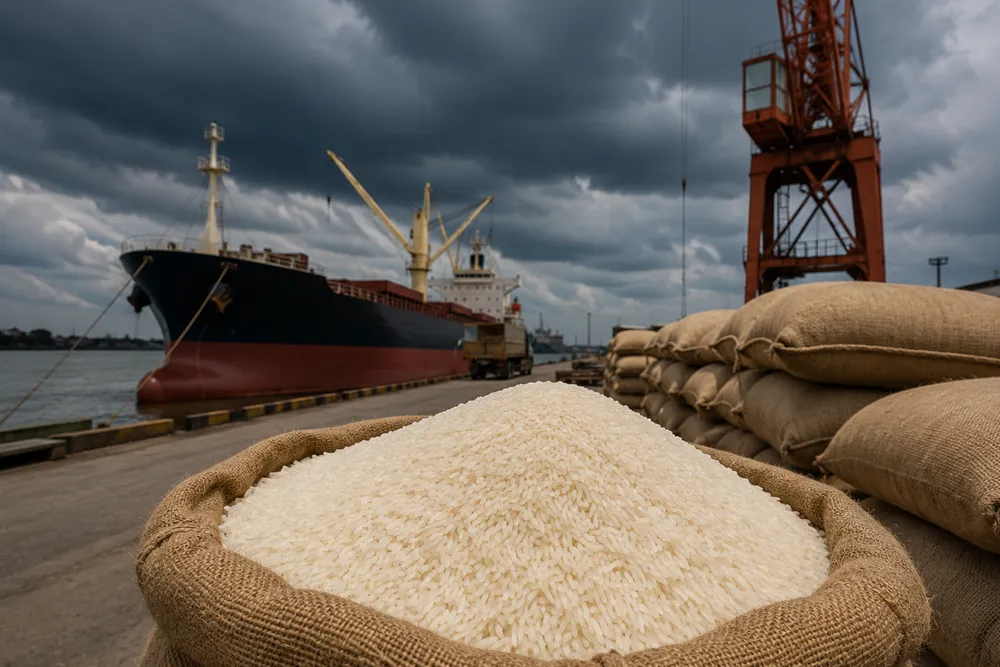
According to sources, Indian rice export prices rose for a third straight week, on a higher reserve price for the commodity sold under the government's Open Market Sale Scheme (OMSS) and concerns that weak monsoon rains could delay planting. Moreover, India's 5 per cent broken parboiled rice variety <RI-INBKN5-P1> was quoted at $352-$357 per ton the week till Thursday, an increase from last week’s $348-$352. Particularly, Indian 5 per cent broken white rice was priced at $353-$357.
A Kolkata-based trader stated that the market had expected lower OMSS reserve prices, but the government's decision to raise them lifted open market prices. Farmers planted summer-sown rice on 11.5 million hectares as of July 10, down from last year's 12.6 million hectares. In Bangladesh, floods have damaged crops on nearly 28,610 hectares in the 12 districts, with paddy and rice seedbeds among the hardest hit. A Department of Agricultural Extension official mentioned that the current estimates are preliminary. The full extent of crop losses will become clear as the floodwaters recede. Additionally, the traders said that Thailand's 5 per cent broken rice <RI-THBKN5-P1> was quoted at $445-$450, down slightly from $450 quoted last week. Supply is gradually increasing as the dry-season rice harvest enters the market, although traders remain cautious over the potential impact of the El Niño phenomenon on production later this year. At the same time, farmers said that the summer-to-autumn harvest will peak from the end of this month through August.
Indonesia Looks For Rice Exports Amid Surplus And Rising Global Prices
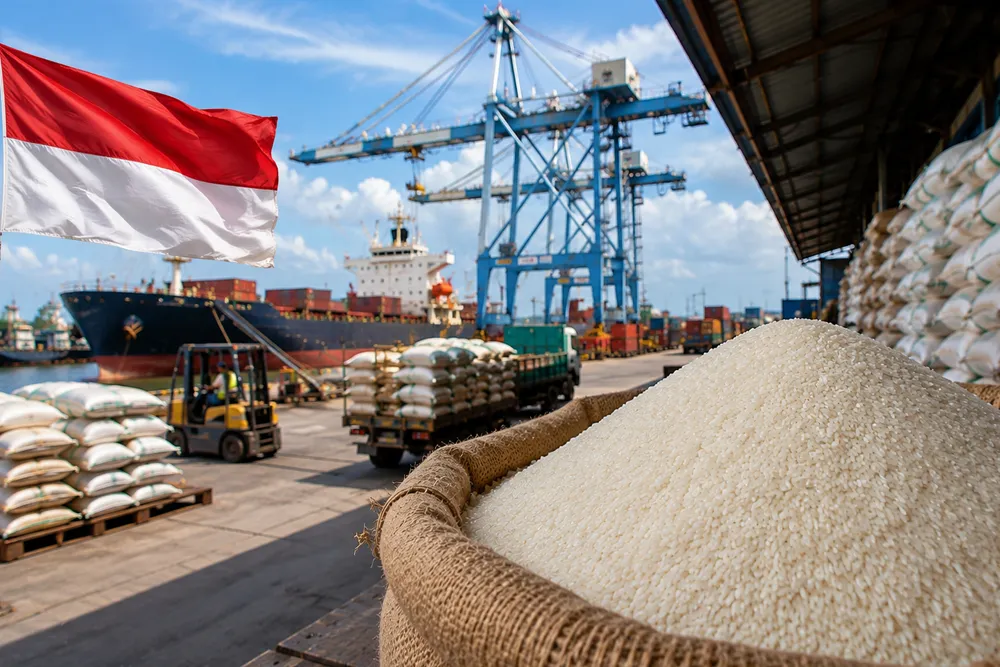
According to Agriculture Minister Andi Amran Sulaiman, Indonesia aims to seize rice export opportunities by riding on increasing global prices, surplus production, and domestic market stability. On Thursday, July 16, he said, “Indonesia will take advantage of surging global prices. Indonesia will certainly take that path because some countries are requesting imports. Negotiations are underway.”
Trading Economics data showed that the world rice price was at US$13.75 per metric quintal as of July 15, an increase from US$12.48 recorded on June 23. Sulaiman highlighted the significance of Indonesia capitalising on the global trend, along with leveraging strong national stocks and output, indicated in 5.3 million metric tons of government reserves managed by state logistics firm Bulog. He noted that the favourable domestic outlook had allowed Indonesia to boost food security and maintain affordable rice prices for residents amid emerging dynamics affecting food costs worldwide. Moreover, the minister confirmed that Indonesia had received rice trade requests from several countries, including Malaysia and Singapore, noting that talks are still ongoing. He cited President Prabowo Subianto’s directive to achieve self-sufficiency in food commodities by boosting national production to ensure adequate supplies for domestic needs, along with exploring export opportunities.
Why Does The EU Reject Chinese Rice Flour Shipments?

According to sources, the European Union has rejected a Chinese rice flour shipment due to the presence of unauthorised genetically modified organisms GMOs. Notably, this incident highlights ongoing global scrutiny over food safety and genetic modification in agricultural trade, which has recently influenced significant rice-exporting nations, including India. The European Union has formally rejected a consignment of rice flour originating from China by citing the detection of unauthorised genetically modified organisms. In addition, the Netherlands, acting through the EU’s Rapid Alert System for Food and Feed, identified specific genetic sequences, known as the 35S promoter and T-Nos, in the hydrolysed rice flour product. These findings signal the presence of modified genetic material that has not been approved for food use within European markets. This development emerges at a time of high sensitivity regarding rice trade and international food standards. China has rejected multiple shipments of non-basmati rice from India earlier by mentioning similar concerns over GMO contamination. But, according to Indian authorities and industry experts, India does not cultivate genetically modified rice for commercial purposes, leading to concerns that these technical hurdles are being used as non-tariff trade barriers.
Share this article
Article Info
Read Time
4 min read
Published
17 Jul 2026
Author
Megha Bajaj
Category
Rice News