Latest Developments in the Rice Sector
Weekly Newsletter
Rice Roundup
Your weekly guide to check the latest developments in the Rice Sector
The global rice sector has seen several significant developments recently, ranging from export trends and government policies to food security initiatives across different regions. These updates reflect how rice continues to play a critical role in global trade, agriculture, and food security.
Rice Boom, Price Gloom: Vietnam’s 2026 Export Story
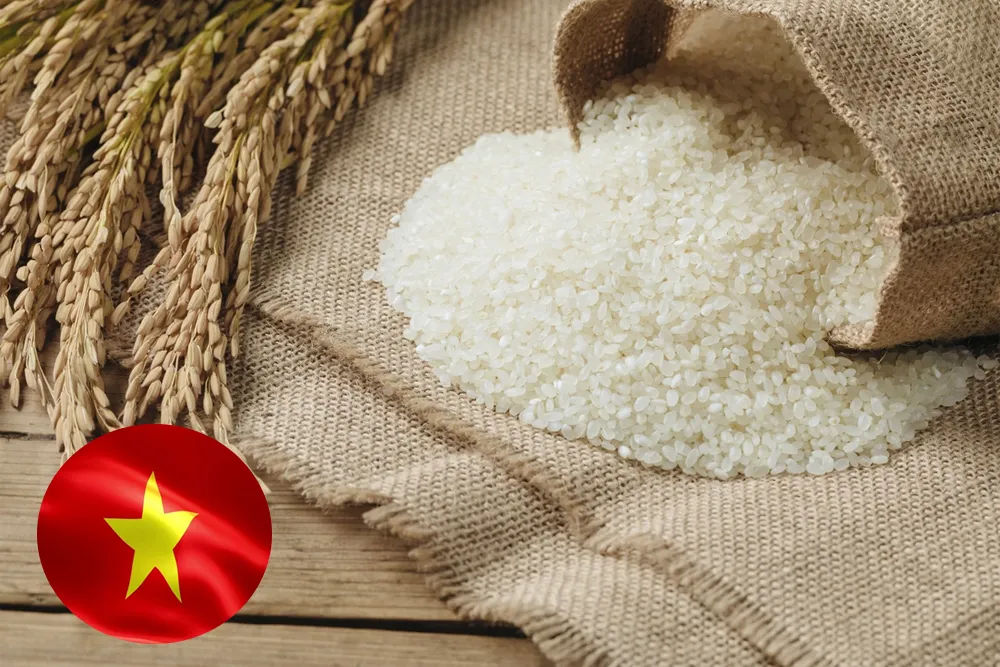
Vietnam exported around 1.3 million tons of rice during January and February 2026, valued at $599.3 million, according to the Ministry of Agriculture and Environment. While export volume increased by 5% compared with the same period last year, the total export value declined by 11.2%, indicating a fall in global rice prices. In February alone, the country exported nearly 640,000 tons worth $289.4 million. The average export price during the two months was estimated at $464.1 per ton, reflecting a 15.4% decline year-on-year. The Philippines remained Vietnam’s largest rice market, accounting for 47.6% of total exports, followed by China with 18.3% and Ghana with 8.9%.
Revival In Rice Sector: Senegal Backs Farmers Amid Soaring Imports
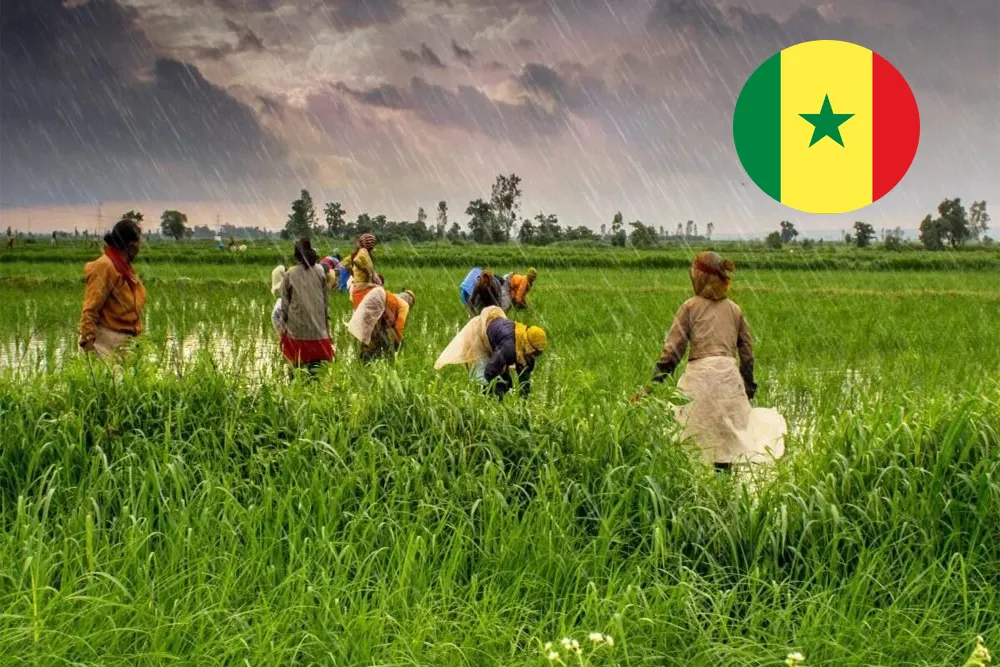
Meanwhile, the government of Senegal has introduced a support package to strengthen its domestic rice sector amid rising imports. The policy includes a subsidy of CFA50 (about US$0.09) per kilogram for purchases of locally produced rice, effective from 5 March 2026. The initiative aims to make domestic rice more competitive compared with imported varieties and to encourage wholesalers and retailers to source rice from local producers. The measure comes at a time when Senegal’s rice imports remain high. The country imported nearly 1.6 million tonnes of rice in 2024–2025, and the USDA projects imports of about 1.7 million tonnes for 2025–2026, prompting the government to take steps to support local production.
Rice Reserves Strong: Indonesia Says Food Security Intact
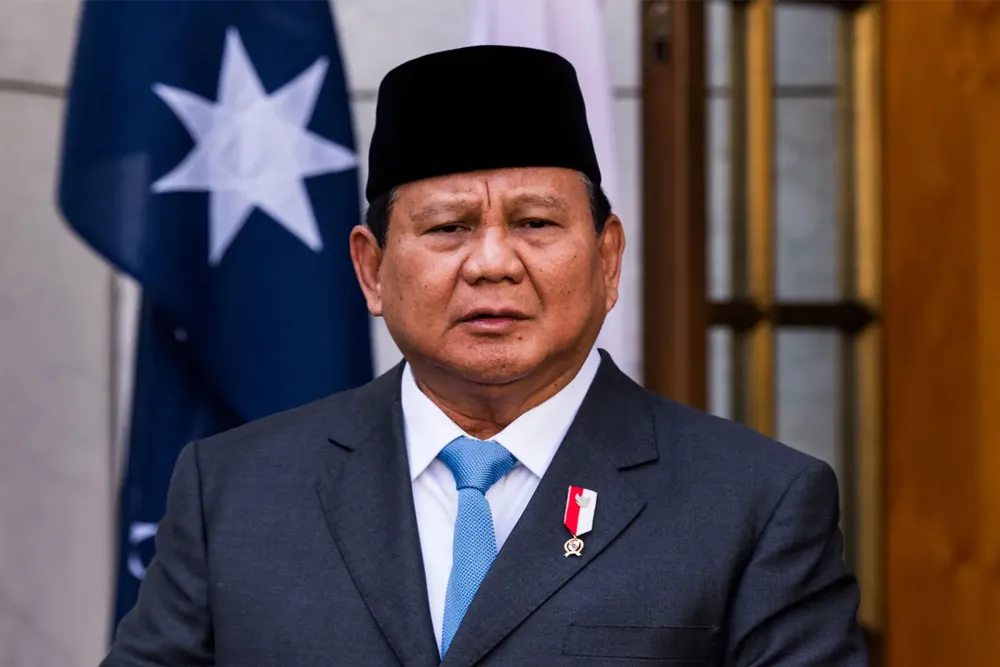
Indonesian President Prabowo Subianto recently reassured citizens that the country’s food supply remains secure despite escalating geopolitical tensions in the Middle East. Speaking during a public event, he emphasized the importance of food security as global supply disruptions and rising fuel prices could impact food costs worldwide. Indonesia has reportedly achieved self-sufficiency in rice production and did not import rice last year. The country also maintains strong reserves, with the State Logistics Agency (Bulog) reporting 3.74 million tons of rice stocks as of March 9. The president also stated that Indonesia is making progress toward meeting its domestic protein needs as well.
Rice Across Borders: India Helps Malawi Battle Food Shortages

India has also taken steps to support global food security by sending 1,000 metric tons of rice to Malawi as humanitarian assistance. The shipment was dispatched from Nhava Sheva Port in Maharashtra to help communities facing food shortages caused by severe drought linked to the El Niño weather phenomenon. The drought has disrupted rainfall patterns across parts of southern Africa, including Malawi, leading to reduced agricultural production and increasing food insecurity. According to Ministry of External Affairs spokesperson Randhir Jaiswal, the assistance reflects India’s continued commitment to strengthening cooperation among countries of the Global South and supporting partners during crises.
From Ports to Plates: India’s Basmati Prices Face Downward Trend
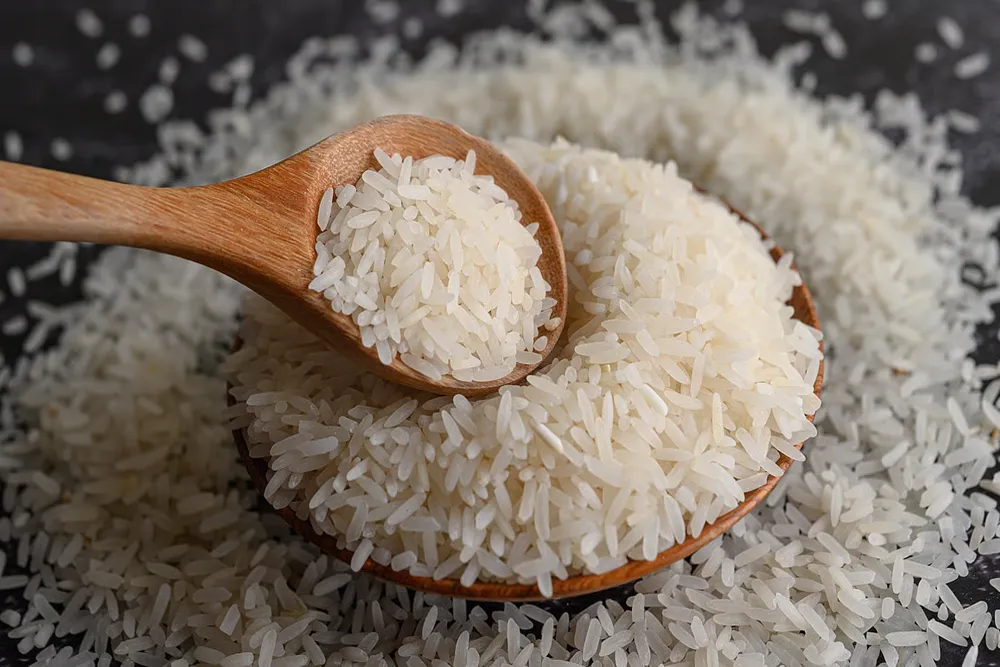
At the same time, domestic basmati rice prices have declined due to disruptions in exports to the Middle East, a key market that accounts for nearly half of India’s basmati shipments. Industry experts say that about 400,000 tonnes of basmati rice are currently held up at ports and in transit because of the ongoing crisis in West Asia. The slowdown in exports has increased domestic supply, putting pressure on prices. According to Dev Garg, Vice President of the Indian Rice Exporters Federation, basmati rice prices have already fallen by around 6% since the conflict began, and further declines may occur if the situation continues.
High Yields, Low Nutrition: Bangladesh’s Rice Paradox
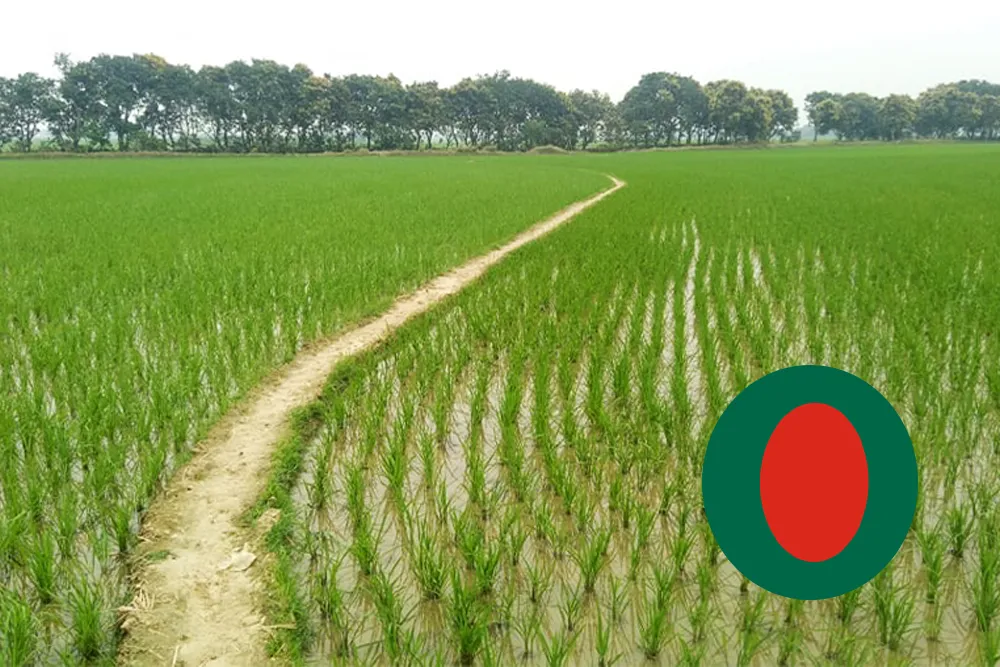
In Bangladesh, despite impressive growth in rice production, concerns remain about nutrition and food quality. Bangladesh became world’s third-largest rice producer, with production rising from 10.9 million metric tons in 1971 to 42 million metric tons in 2022. However, heavy reliance on rice in daily diets has contributed to widespread micronutrient deficiencies. Health data shows that 28% of children under five are stunted, 37% of women of reproductive age are anaemic, and about 13% of the population is undernourished. Researchers suggest that farmers’ preference for high-yielding rice varietieshas contributed to this issue, as nutritional traits and climate resilience are often overlooked when selecting crops.Overall, these developments highlight the complex changes taking place in the global rice sector, where production trends, trade policies, climate impacts, and geopolitical tensions continue to influence supply, prices, and food security across different regions.
Quick Reads
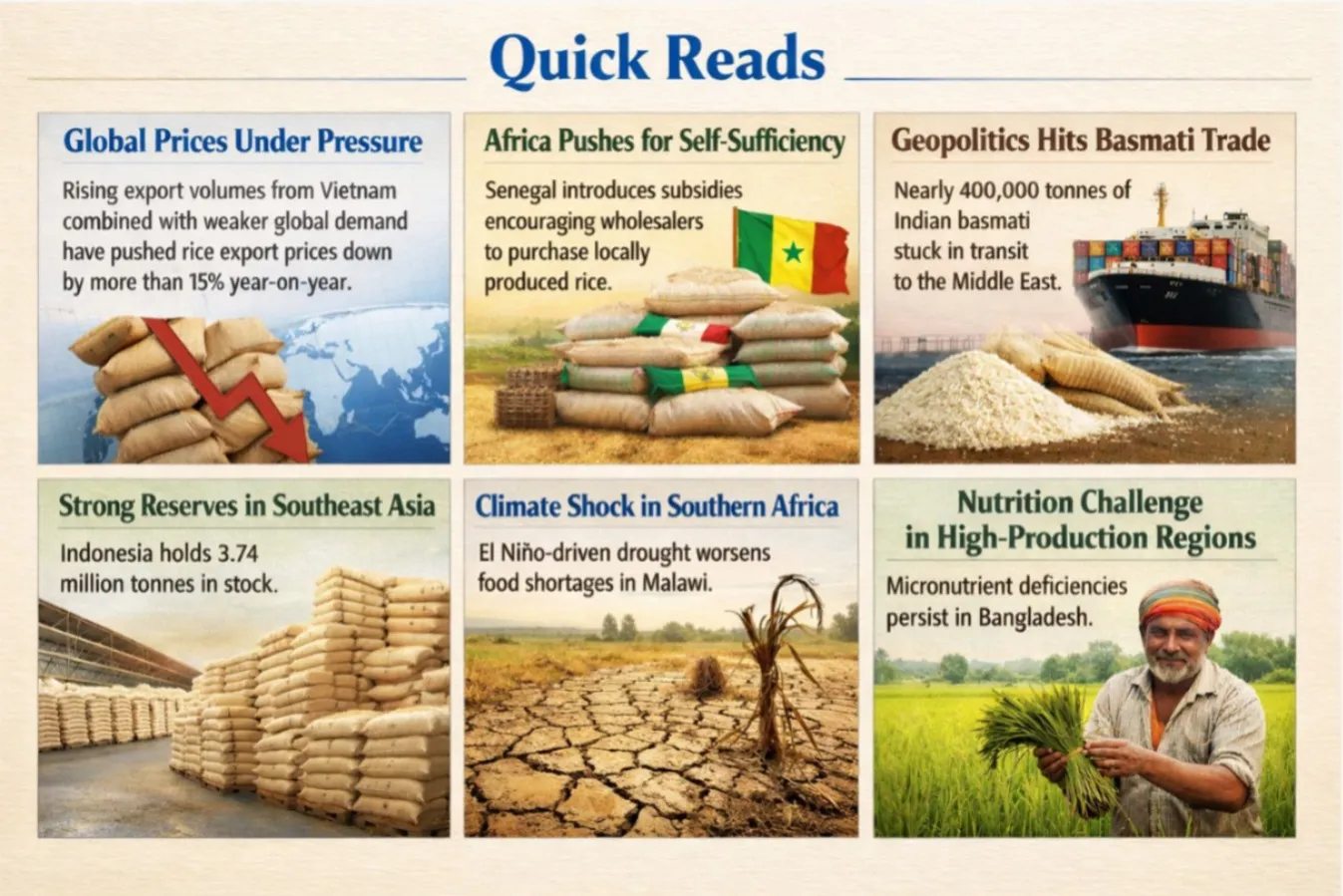
Global Prices Under Pressure
Rising export volumes from Vietnam combined with weaker global demand have pushed rice export prices down by more than 15% year-on-year.
Africa Pushes for Self-Sufficiency
To reduce heavy import dependence, Senegal has introduced subsidies encouraging wholesalers to purchase locally produced rice.
Geopolitics Hits Basmati Trade
Export disruptions to the Middle East have left nearly 400,000 tonnes of basmati rice from India stuck in transit, putting downward pressure on domestic prices.
Strong Reserves in Southeast Asia
With about 3.74 million tonnes in stock, Indonesia says its rice reserves are sufficient despite rising global uncertainty.
Climate Shock in Southern Africa
Drought linked to El Niño has disrupted agriculture in Malawi, increasing food shortages and prompting humanitarian rice shipments.
Nutrition Challenge in High-Production Regions
Even as Bangladesh becomes one of the world’s largest rice producers, micronutrient deficiencies remain a public health concern.
Did You Know?
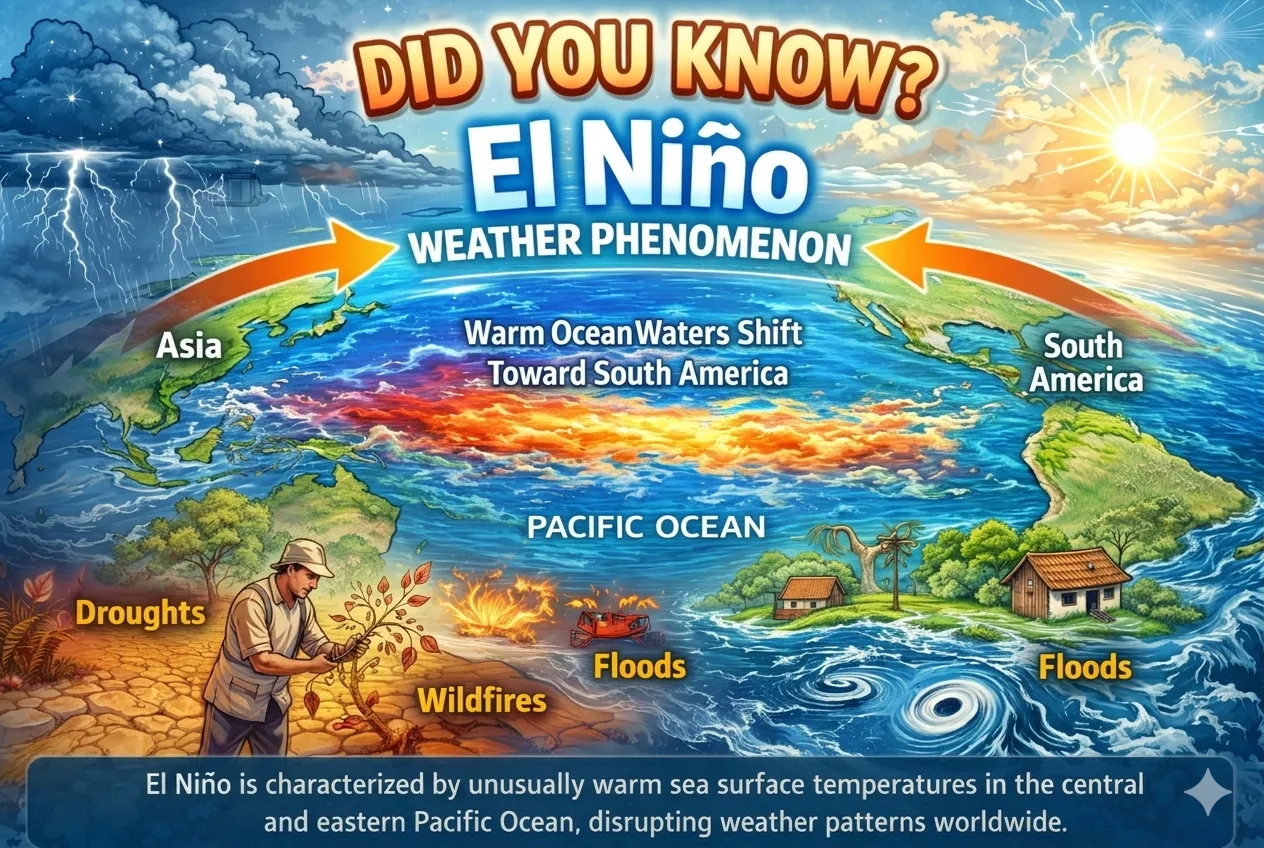
What is El Niño?
El Niño is a natural climate phenomenon that occurs when surface waters in the central and eastern Pacific Ocean become unusually warm. This warming changes global weather patterns, often leading to droughts in some regions and heavy rainfall in others.
Why does it matter for agriculture?
The El Niño phenomenon can significantly impact agricultural production by altering rainfall patterns across different regions. It often reduces rainfall in parts of Asia and Africa, which can affect crop growth and lower yields. In some areas, it leads to severe droughts that damage harvests and increase the risk of food shortages. At the same time, other regions may experience excessive rainfall and flooding, which can harm crops, disrupt farming activities, and damage agricultural infrastructure.
In the current season, El Niño related drought conditions have affected agricultural production in southern Africa, including Malawi, contributing to food shortages and increasing the need for humanitarian grain assistance.
Top 5 Largest Rice Producing States in India
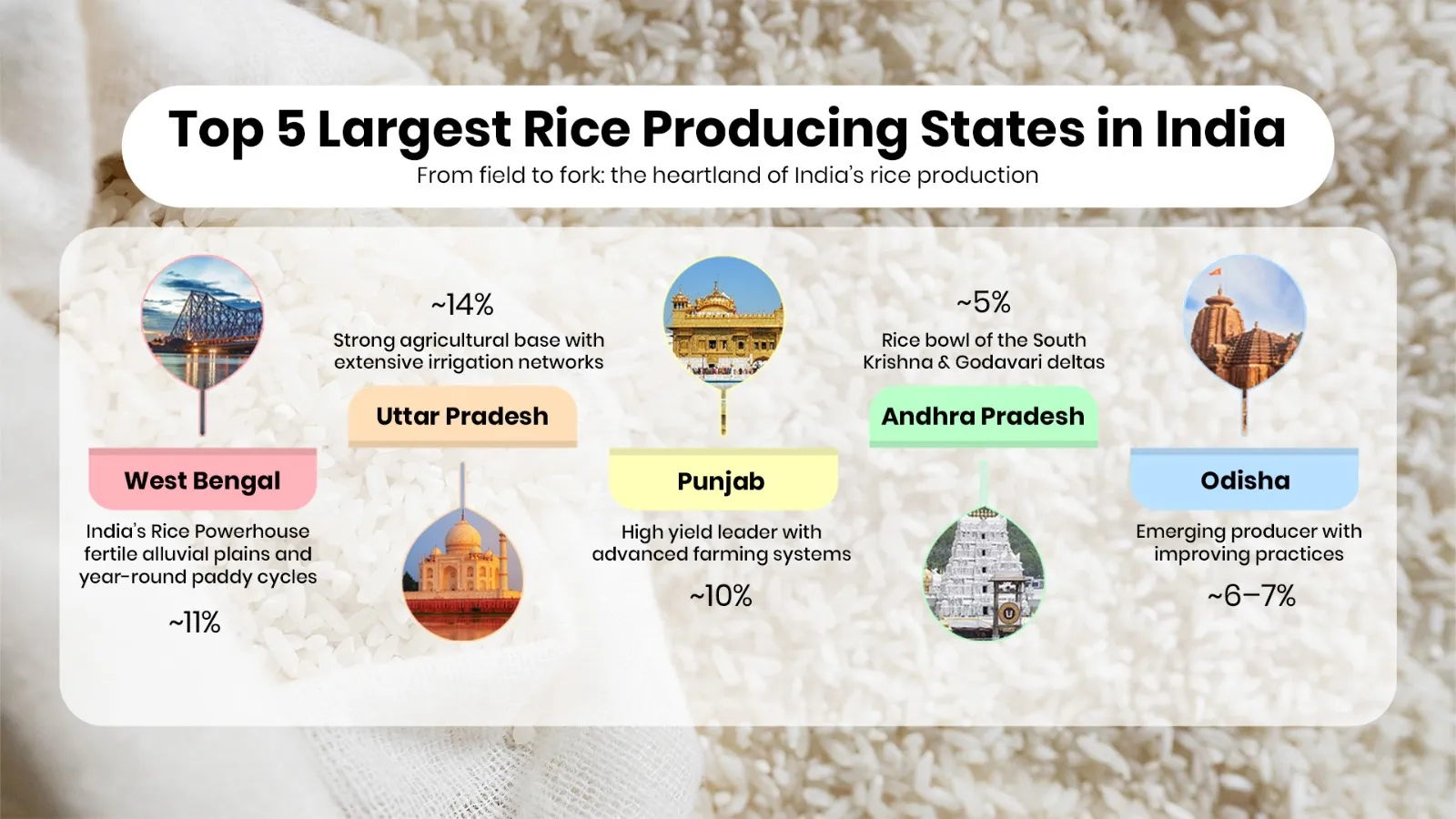
West Bengal – India’s Rice Powerhouse
The largest rice-producing state in India, supported by fertile alluvial soil, favorable climate, and multiple rice-growing seasons.
Uttar Pradesh – Strong Agricultural Base
A major contributor to national rice production due to its vast agricultural land and extensive irrigation network.
Punjab – Leader in Productivity
Known for high-yield rice cultivation, advanced farming techniques, and a key role in India’s government procurement system.
Andhra Pradesh – Rice Bowl of the South
Fertile river deltas of the Krishna and Godavari support large-scale rice cultivation in the state.
Odisha – Emerging Rice Producer
With favorable climate and improved farming practices, Odisha continues to strengthen its position in India’s rice sector.
Key Insight:
Together, these states account for a significant share of rice production in India, supporting domestic supply and export potential.
Share this article
Article Info
Read Time
1 min read
Published
10 Mar 2026
Author
Megha Bajaj
Category
Newsletter