Virus Affects Punjab’s Rice Growing Regions, Stunting Rice Crops
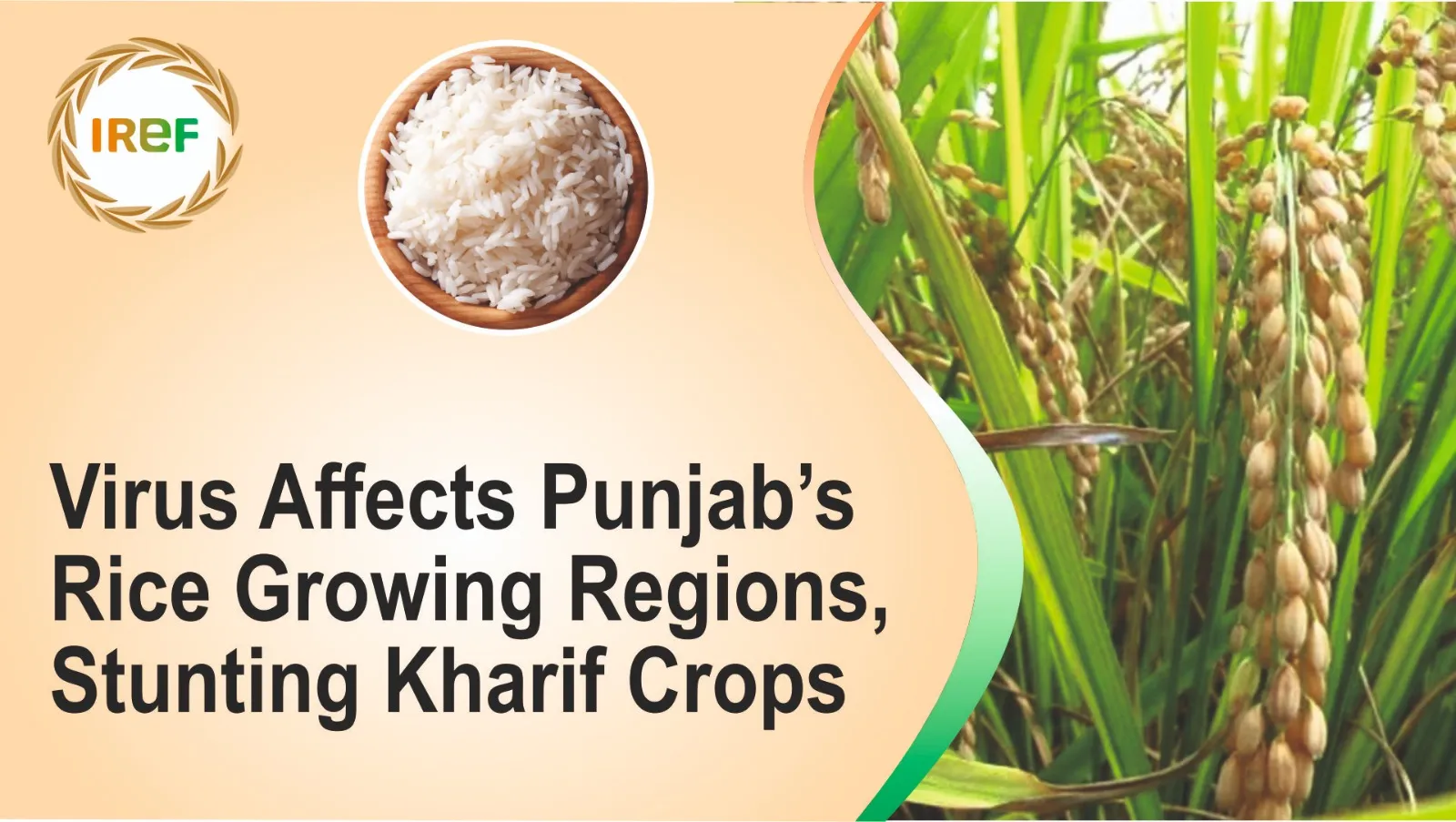
Southern Rice Black-streaked Dwarf Virus (SRBSDV) has resurfaced in the heart of Punjab’s rice-growing region. It was the first identified in the region in 2022, but has struck the kharif crop once again, stunting rice plants in nearly eight districts.
Now, farmers are grappling with yield losses and uncertainty, scientists and agricultural experts are racing to contain the damage and trying to find out the virus’s revival. The virus’s spread has triggered concern among farmers. Therefore, several farmers are requesting the state government to carry out a girdawari (crop loss assessment) and declare compensation.
About the Virus Affecting Rice Crops
SRBSDV comes under the Fijivirus genus. It was first reported in Southern China in 2001. However, the virus struck in Punjab’s rice-growing regions three years ago when farmers noticed a sudden reduction in the height of rice crops in their fields and were unable to determine the cause. The indications of SRBSDV infection are a sharp reduction in plant height, often to half or even one-third of the normal. Infected plants generate narrow, upright leaves with white specks, shallow roots, poor tillering and impeded shoot growth.
In some of the critical cases, plants may lose their vitality prematurely, resulting in substantial yield loss. Field surveys carried out by Punjab Agricultural University (PAU), Ludhiana, project that early-sown rice crops are particularly vulnerable, with incidence rates ranging from 10 to nearly 40 per cent.
How could a virus affecting Rice Crops be tackled?
Dr MS Bhullar, Director of Extension Education at Punjab Agricultural University (PAU), highlighted that zinc deficiency can also imitate viral symptoms; not all stunted plants are struck by SRBSDV. He requested farmers to consult extension services for accurate diagnosis. Not only this, but he also asked for proper nutrient management to avoid misdiagnosis and unnecessary panic for their rice crops.
Notably, no cure for SRBSDV is available yet. Prevention and early detection are crucial. PAU suggests that farmers need to follow transplanting schedules strictly, as rice crops transplanted after June 15 show a lower incidence. Some of the essentials are checking WBPH (White-backed planthopper, Sogatella furcifera, a rice pest) activity, avoiding seed stock from infected fields, and maintaining weed-free plots. Additionally, Farmers who notice symptoms should report to the nearest PAU experts or Krishi Vigyan Kendra. The stakes are high as rice is a significant economic crop in Punjab. The current outbreak reminds us of the weaknesses in our agricultural systems and the requirement for integrated pest management, climate-resilient practices, and scientific monitoring. Apparently, Punjab’s farmers are making efforts to tackle this terrible virus. On the other hand, the efforts of researchers, policymakers, and cultivators will identify whether SRBSDV stays a seasonal menace or turns out to be a long-standing threat.
Share this article
Article Info
Read Time
3 min read
Published
7 Aug 2025
Author
Megha Bajaj
Category
News