Trump’s Fresh Tariff Blow: How It Affects India-Iran Ties & Basmati Rice?
Trump’s Fresh Tariff Blow: How It Affects India-Iran Ties & Basmati Rice?
By Megha Bajaj
In the series of global Tariffs, US President Donald Trump has announced Fresh 25% tariffs on the countries doing trade with Iran. Notably, the move is seen as a pressure tactic on Iran over its response to nationwide protests that have taken nearly 600 lives.
US President Trump announced the additional 25% tariff decision on Monday, in which he stated that measures would take effect immediately, under which several significant economies, including China, Brazil, Turkey, Russia and India maintain ties with Iran.
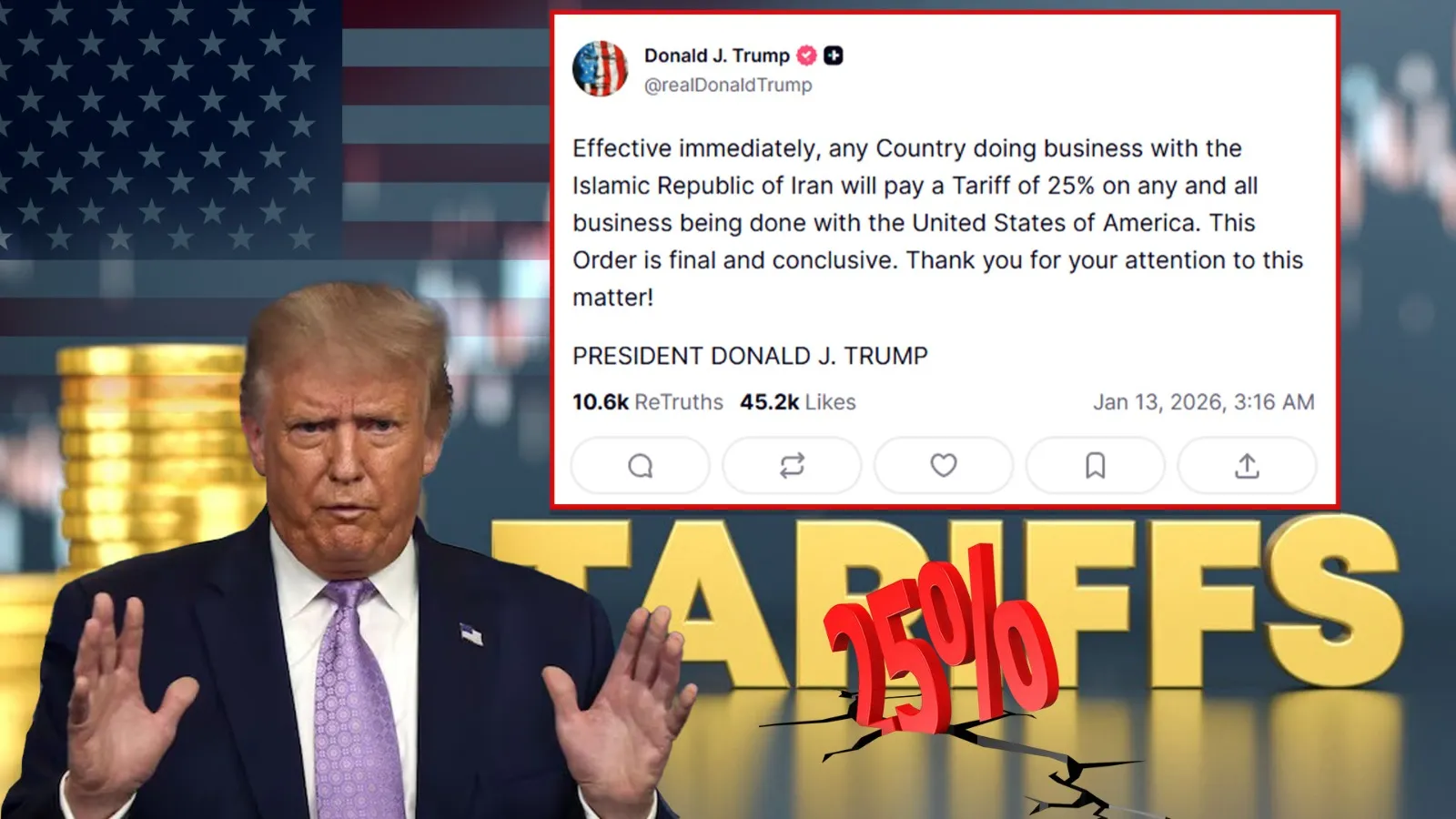
Trump took to Truth Social and stated: “Effective immediately, any country doing business with the Islamic Republic of Iran will pay a Tariff of 25% on any and all business being done with the United States of America. This Order is final and conclusive. Thank you for your attention to this matter”.
Iran-US relations
Undoubtedly, the fact that cannot be neglected in the midst of tariffs array is about Iran and US relations, which are turning bitter. Iran was involved in a 12-day war with US ally Israel, where Washington also bombed Tehran's nuclear facilities in June last year. Currently, Iran is witnessing its biggest anti-government protest in years. While Trump has said the US could meet Iran officials, he has also threatened military action.
Furthermore, on Monday, Iran stated it is keeping communication channels with the US open as Trump considered how to respond to the situation. The uprising has posed one of the gravest tests to the rule since the Islamic Revolution in 1979. The protests began as retaliation for the economic hardships and have expanded to call for a change in the regime.
According to the US-based rights group HRANA, nearly 599 deaths, including 510 protesters and 89 security personnel, have been verified since the protests began on December 28.
India and Iran Trade
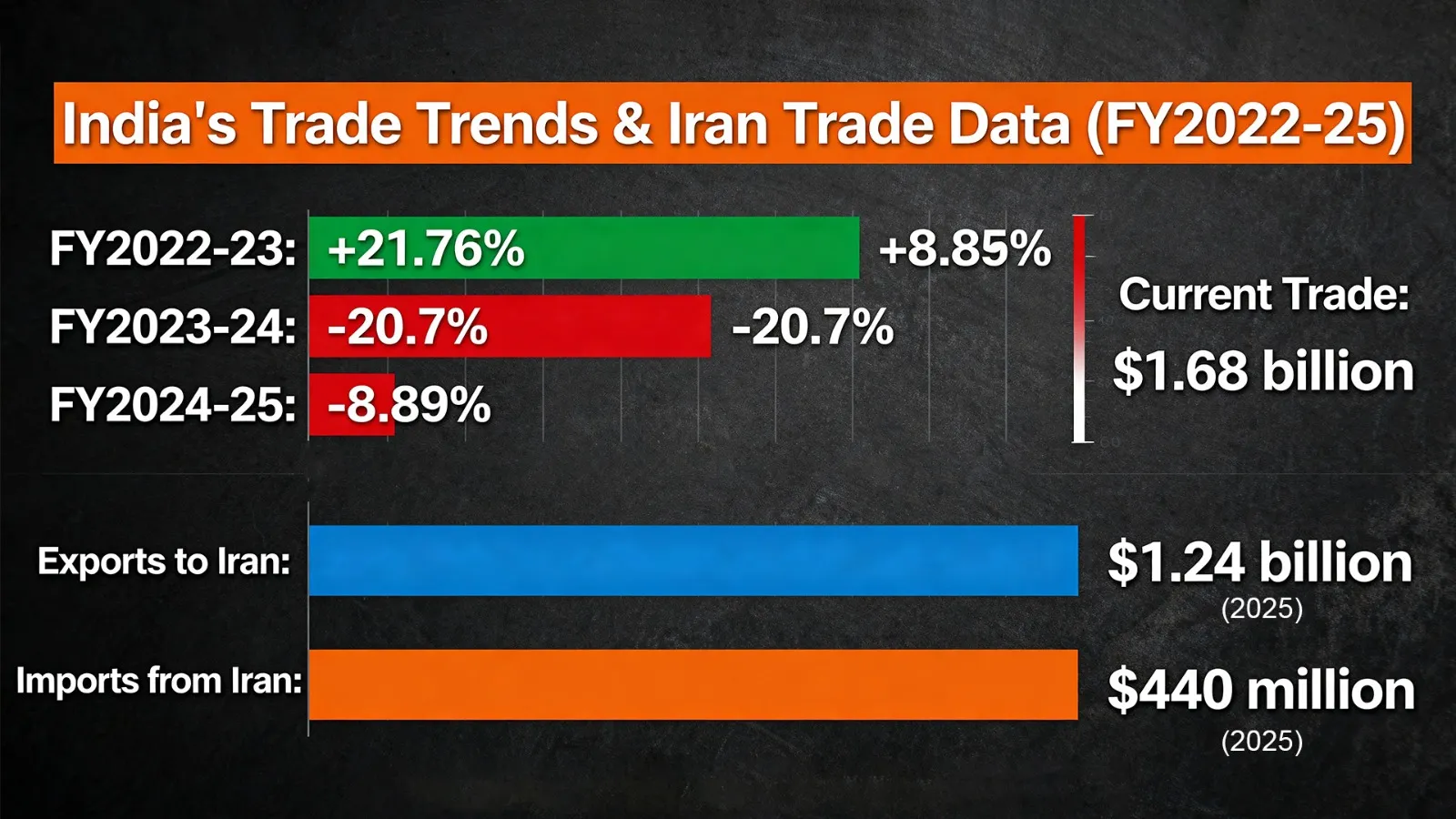
Notably, India is among Iran's five largest trade partners in recent years since India exports basmati rice, tea, sugar, fresh fruits, pharmaceuticals, soft drinks, kernels, boneless bovine meat, pulses and other products, whereas it imports saturated methanol, petroleum bitumen, apples, liquified propane, dry dates, inorganic, organic chemicals and almonds among other commodities from Iran. While India's trade had increased 21.76 per cent in Financial Year 2022-23, it witnessed a significant decrease of 20.7 per cent in FY2023-24 and a further decrease of 8.89 per cent in FY2024-25. However, at present, the trade stands at $1.68 billion. Apparently, India exported goods worth $1.24 billion to Iran, while importing goods worth $440 million in the financial year 2025. It is noteworthy that India and Iran undertook a joint project to develop the Chabahar port in 2015. India continues to be involved in the project and is seen as a key hub for trade in the region.
Basmati Rice amid India-Iran Trade
Rice was India's largest export item to Iran at $734 million in 2023, followed by soybean meal valued at $96.8 million and bananas worth $52 million. On the import side, India's purchases from Iran were dominated by acyclic alcohol derivatives that are halogenated, sulphonated or nitrated, amounting to $309 million. According to reports, Iran is a significant market for Indian basmati rice, typically purchasing nearly one million tonnes each year. Iran has traditionally been among the biggest overseas markets for Indian basmati rice. Moreover, Reports stated that Iran purchases close to 12 lakh tonnes each year, with the trade estimated at around Rs 12,000 crore.
Ironically, India's top exporting destinations are currently the United States of America, United Arab Emirates, Netherlands, China, United Kingdom which account for 41% of India's exports according to the Ministry of Commerce dashboard. Consequently, Iran is not among its top five trading partners in terms of both imports and exports.
Share this article
Article Info
Read Time
4 min read
Published
13 Jan 2026
Author
Megha Bajaj
Category
News