Rice Mills Call for Action as Thai Rice Prices Deteriorate
November 17, 2025
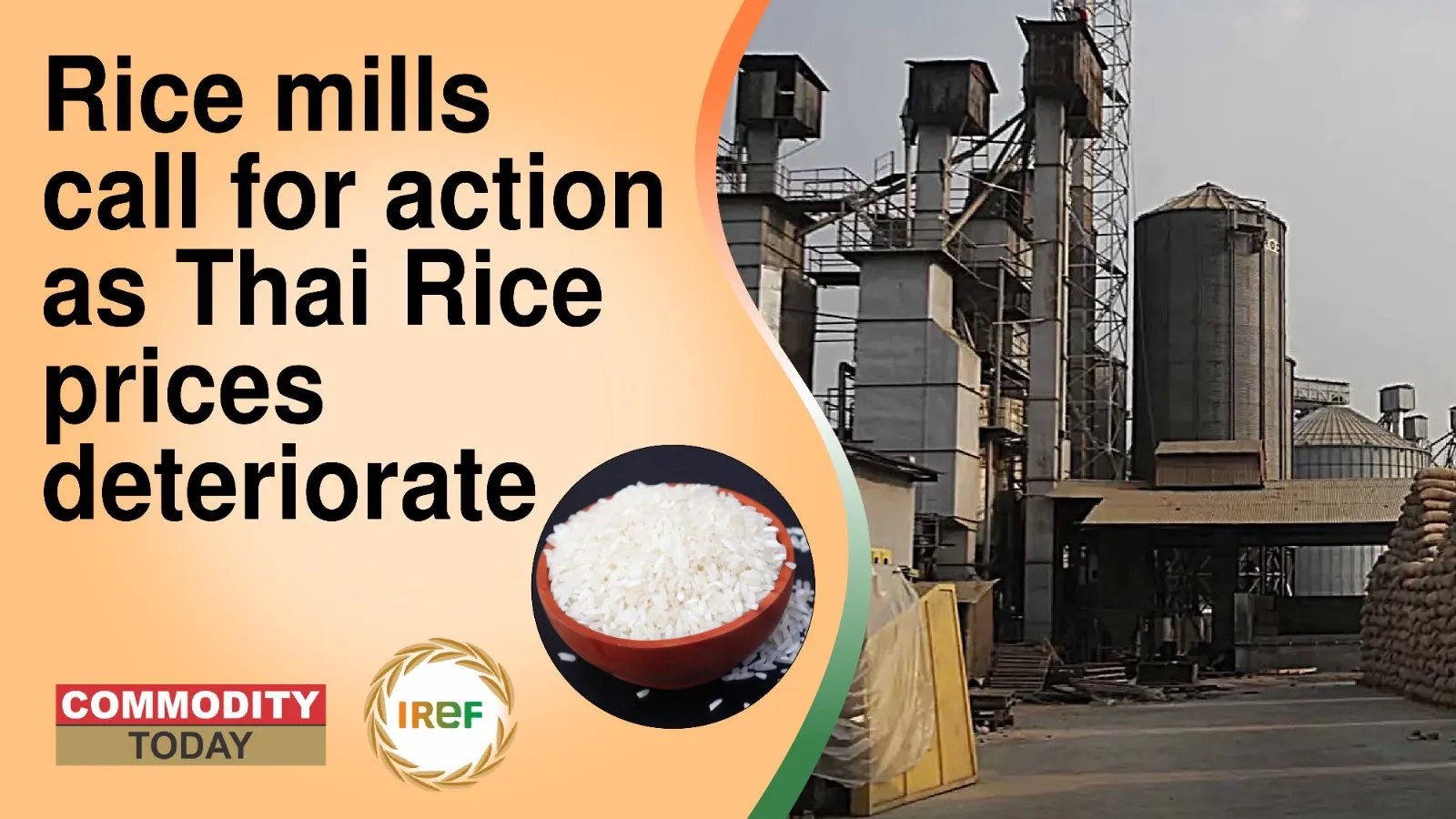
Over 90% rice mills are facing losses as Thai rice prices have hit a 20-year low, rice price drop in Thailand has left farmers struggling with debt repayment. President of the Thai Rice Mills Association, Banjong Tangjitwattanakul, highlighted the sharp decline in paddy and white rice prices, which have reached a 20-year low.
Decline in Thai Rice Prices Resulted in Price Reductions for By-Products
Rice price drop in Thailand has become a major concern for the Thai government, which is clearly visible from the price of rice varieties of Thailand. Prices have plummeted by 50% from last year, when white rice was selling at 10,000-12,000 baht a tonne. The price of 15% moisture paddy has fallen to 6,200 baht a tonne, while the price of fresh paddy with 25% moisture is down to 5,000 baht a tonne. Rice Price slump has also caused price reductions for by-products, with the price of rice bran decreasing by 40% and that of broken rice falling by 35-40%, resulting in more than 90% of rice mills experiencing a drop in revenue and significant losses.
The decline in rice price has left milling industry Thailand in distress as several mills previously invested in rice at higher prices through a government programme that offered interest subsidies for stockpiling, with 5-6 million tonnes of paddy left in storage. Supply has outpaced demand, leading to sharp price declines.
Rice Mills Call for Govt. Intervention
The Crops Grower and Merchandise Association called on the government to revoke the decision allowing the import of genetically modified organism feed corn with a quota of 1 million tonnes and an import tax exemption. Terdsak Lapjitkusol, president of the association, said Thailand has an adequate supply of local raw materials that provide energy, and it does not need to rely on wheat or other substitutes. Feed corn is recognised as a key source of energy, further noted the association. For 2024, Thailand was projected to have had a domestic surplus in several energy grains, including 4.56 million tonnes of corn, 1.96 million tonnes of tapioca, 2.86 million tonnes of rice bran, and 3.72 million tonnes of broken rice.
The association said Thailand has 13.1 million tonnes of local raw materials that are sources of energy for livestock. The country’s feed demand was estimated at 21.1 million tonnes in 2024, with energy grains making up 60% of total raw materials, equivalent to 12.7 million tonnes. The group requested the government postpone the import of energy grains, with effective management of domestic supplies to address the current surplus. This news related to decline in Thai rice prices can be linked with the Indian Rice Exporters Federation (IREF) latest news on The Thai Rice Exporters Association hinting at a major turbulence in global rice markets as reports suggest that India, the world’s largest rice exporter is planning to release around 20 million tonnes of stockpiled rice in September.
Share this article
Article Info
Read Time
3 min read
Published
17 Nov 2025
Author
Megha Bajaj
Category
News