Punjab High Court Quashes Ban on Hybrid Paddy Seeds
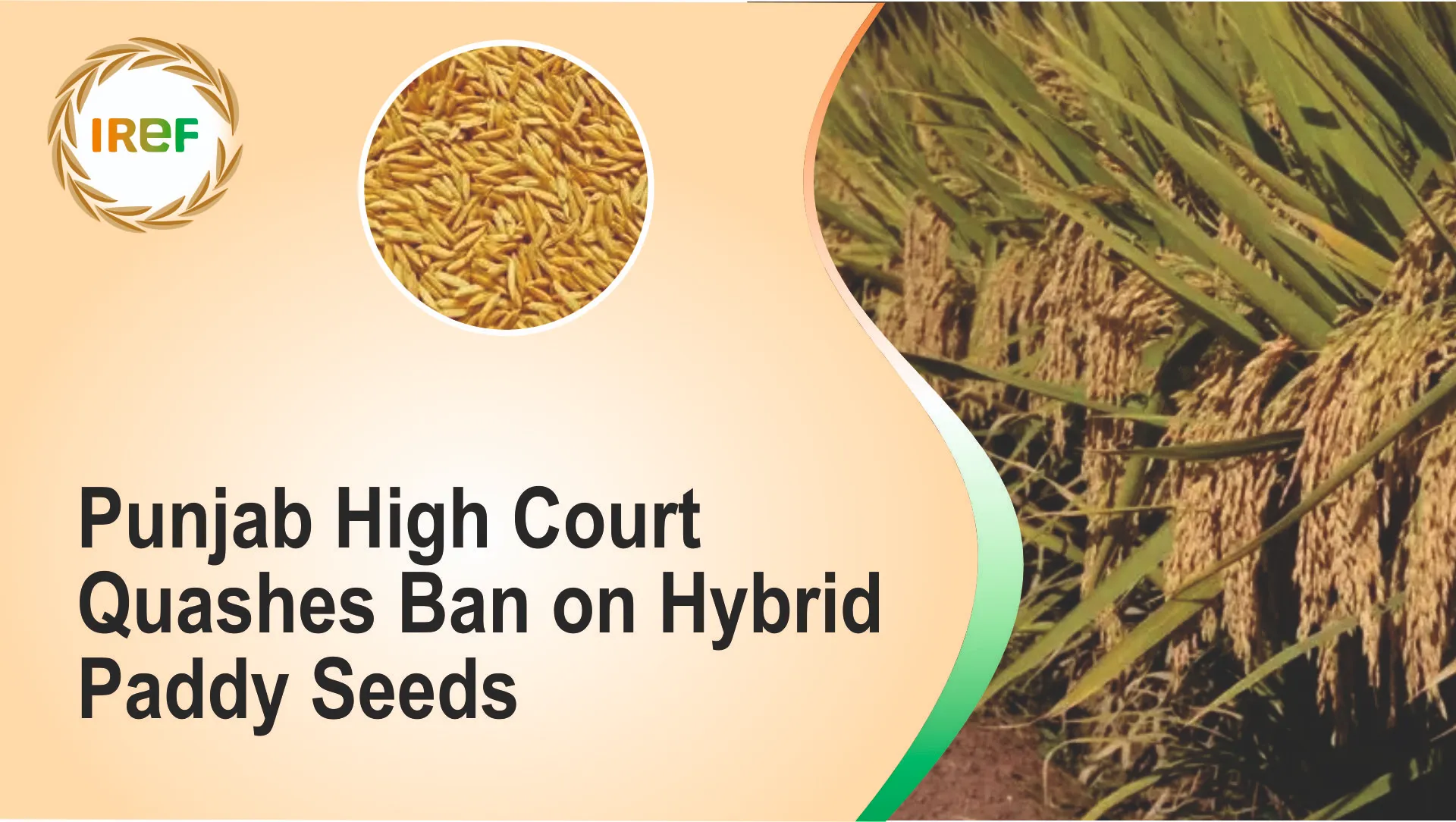
In a landmark judgement that holds deep importance for Indian agriculture, the High Court of Punjab and Haryana has quashed ban on hybrid paddy seeds. The high court set aside Punjab’s April 7 order imposing a blanket ban on the use of notified hybrid paddy seeds in the State after holding that it did not withstand the test of legality. However, in a landmark decision upholding the interests and welfare of farmers the bench clarified that the State could not prohibit the use of varieties duly notified by the Government of India under the Seeds Act of 1966. It, as such, upheld the administrative orders of April 4 and April 10, 2019, which had restricted only the use of non-notified hybrid seeds, while permitting the notified varieties.
The decision by the high court brings a sigh of relief and reaffirms something fundamental: science and innovation must lead agricultural policy for lakhs of famers who rely completely on dependable, high-yielding inputs, and for an industry built on years of research and scientific evaluation. One of the most important points of the debate is the question of trust- in institutions, in data, and in the choices made by farmers themselves. Ban on hybrid paddy seeds would symbolize something that must not go unnoticed. To be very clear ban would symbolize that government has no trust over the choice made by farmers themselves. That trust was shaken earlier this year when, without prior consultation or scientific basis, Punjab imposed a sweeping ban on both notified and non-notified hybrid seeds. The impact was immediate and disruptive, creating confusion for farmers just ahead of sowing season and undermining confidence in regulatory consistency.
Now, with legal clarity restored, the Federation of Seed Industry of India (FSII) welcome the Court’s decision — not just as a correction of policy, but as a renewed commitment to evidence-based governance. The Court’s verdict also reinforces a key principle — states cannot unilaterally ban centrally notified seeds. Regulation must be consistent, science-based, and aligned with national law.
Share this article
Article Info
Read Time
2 min read
Published
22 Aug 2025
Author
Megha Bajaj
Category
News