Punjab Floods To Affect Basmati Rice Production, Govt. Responds To Farmers’ Concern
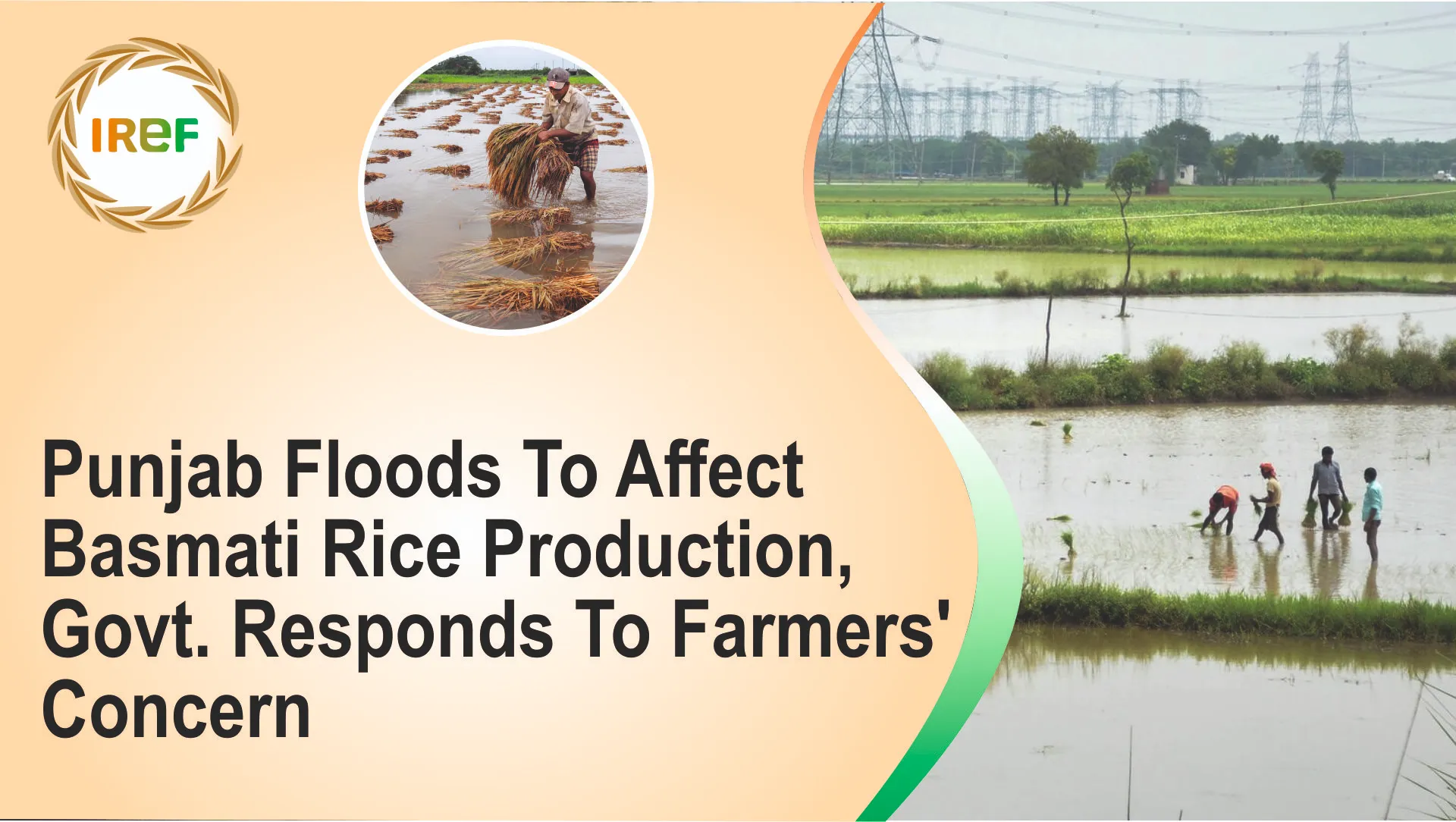
Amidst the heavy rainfall and flood situation, Punjab is likely to witness a 20-25% decline in basmati rice production this year. According to the Industry’s preliminary reports, the basmati rice crop has been affected by about 1.5 lakh acres. Ashok Sethi, Director of the Punjab Rice Millers and Exporters Association, stated that the rain continues; therefore, it would be difficult to estimate the extent of the damage to crops, lives, cattle, and houses. In 2024-25, Punjab has over 40 per cent share in India’s Basmati rice export of 6.07 million tonnes (mt).
What did the Punjab Agri Minister say about Punjab Floods?
Punjab’s Agri Minister Gurmeet Singh Khudian stated that around 6 lakh acres (or 2.5 lakh hectares) of crop area have been affected amid heavy rainfall and floods, and basmati and non-basmati rice crops have been highly affected, including cotton crops. According to him, the affected districts are Gurdaspur, Pathankot, Fazilka, Kapurthala, Tarn Taran, Ferozepur, Hoshiarpur and Amritsar. These eight districts have a combined share of over 52 per cent in the state’s Basmati rice area and production, as per APEDA’s 2023 survey. Around 3.84 million tonnes of Basmati rice production in an area of 8.12 lakh hectares have been recorded in Punjab during the Kharif 2023 season. Furthermore, the minister added that the State government has been providing relief, including medical aid and fodder for cattle. As many villages are still inundated with water, assessing crop damage will take more time.
Union Agriculture Minister Shivraj Singh Chauhan on the Punjab floods
On Monday, Union Agriculture Minister Shivraj Singh Chouhan said that he would soon visit Punjab to meet the affected farmers. The Central government assures full support to the affected farmers in this hour of crisis.
Apart from this, the Basmati rice crops in Pakistan have also been damaged due to floods, the only other country where the aromatic rice is grown.
Share this article
Article Info
Read Time
2 min read
Published
2 Sept 2025
Author
Megha Bajaj
Category
News