Prolonged Dry Spell Raised Concerns Of Kashmir’s Saffron Farmers
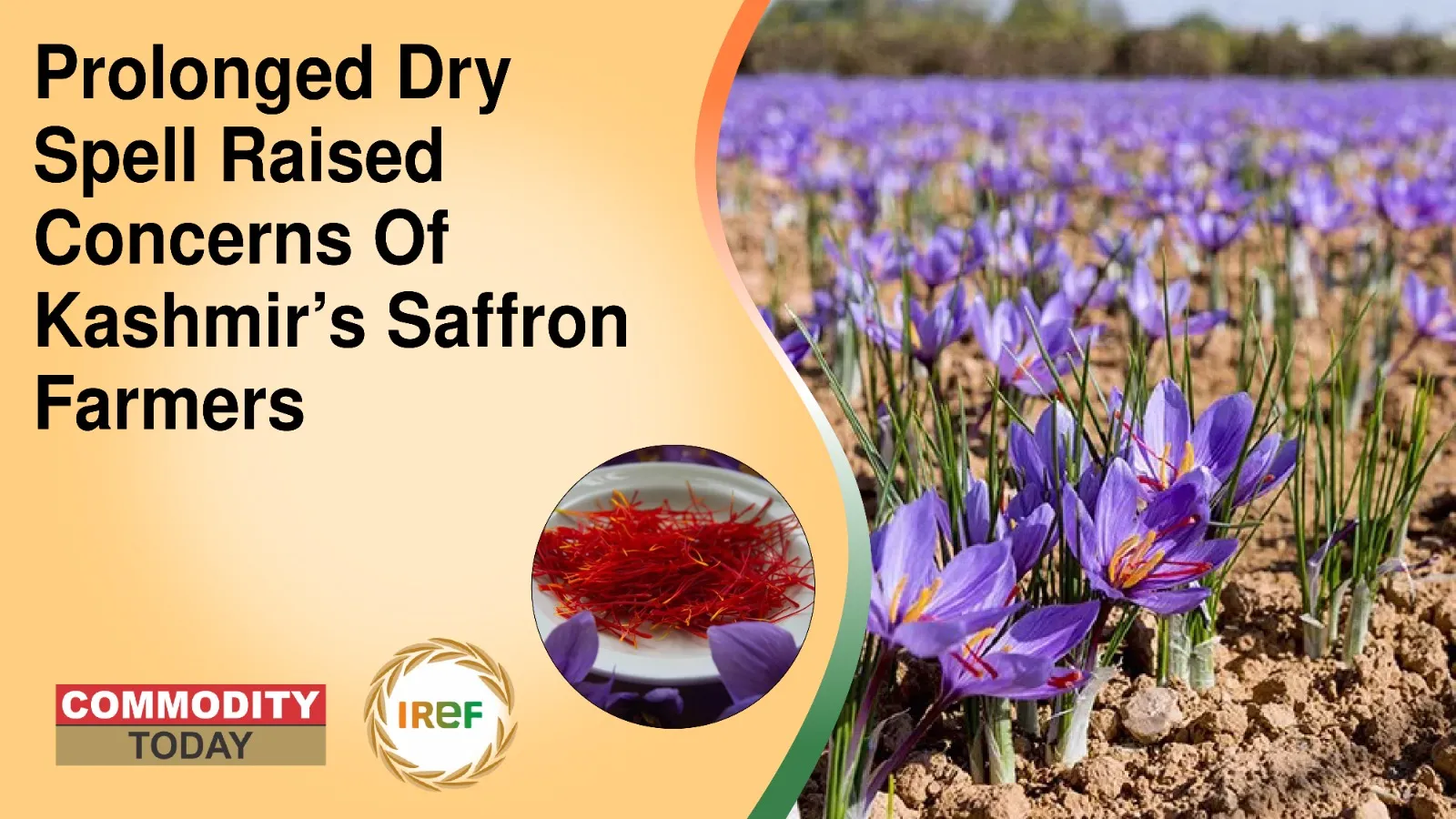
A prolonged dry spell in Kashmir has raised concerns for thousands of saffron farmers. Moreover, experts warn that if the dry weather remains persistent, it could affect the saffron production.
Notably, the Kashmir valley has witnessed very little rainfall, leaving saffron farmers distressed about the survival of saffron corms (bulbs that grow saffron flowers) and the next year’s harvest.
“Rainfall is crucial”- one of the Saffron Farmers
One of the saffron farmers stated that rainfall is crucial at this stage; the prolonged dry spell could severely affect next year’s crop.Furthermore, official data shows that Pulwama and Budgam are the main saffron-producing districts, which have recorded much lower rainfall than usual. Pulwama received 29.4 mm of rain against the normal 47.6 mm, a 38% deficit, whereas Budgam got 23.1mm compared to the usual 54.2 mm, a 57% deficit, one of the steepest in the region. Now, scanty rainfall affects soil moisture, groundwater recharge, and the growth of saffron corms. According to experts, corms cannot absorb nutrients properly without an ample amount of water, which would affect yields.
Difficult year for Saffron Farmers, as saffron production drops
Saffron Farmers are already facing a challenging year as saffron production dropped by 60%-70% due to erratic weather, prolonged dry spells, and porcupine attacks. A saffron farmer said that if the dry spell continues, their fields could suffer even more.
Nearly 20,00 to 25000 families rely on Saffron farming in Kashmir, which normally produces 13-14 tonnes annually. Due to rising costs and poor harvests, several families are grappling financially. They appealed the government to provide support and irrigation help if the dry weather persists.
Read More News:
- Prolonged Dry Spell Raised Concerns Of Kashmir’s Saffron Farmers
- Andhra Pradesh CM Naidu Reveals Five-Point Agriculture Strategy
- “Natural Farming Can Help Combat Challenges in Agriculture,” says PM Modi
- Tamil Nadu Agricultural University Patents Eco-Friendly Zinc Fertiliser Boosting Sustainable Agriculture
- Bangladesh Halts Onion Imports, 30,000 Tons Of Onions Rotting At Borders
- FIR Against Four for Illegal Sales of Fortified Rice
- Bidar Students Transform Organic Farming Into Enterprise
- Telangana Superfine Rice Leaves Massive Coarse Rice Stocks
- Rice Imports from India Suspended at Hili Land Port
- Zero-Duty Arecanut Imports From Bhutan, Myanmar, & Sri Lanka Trigger Crisis For Indian Arecanut Farmers
Share this article
Article Info
Read Time
2 min read
Published
4 Dec 2025
Author
Megha Bajaj
Category
News