Nepal Rice Imports Surge to ₹28 Billion: Causes, Challenges, and Dependence on India
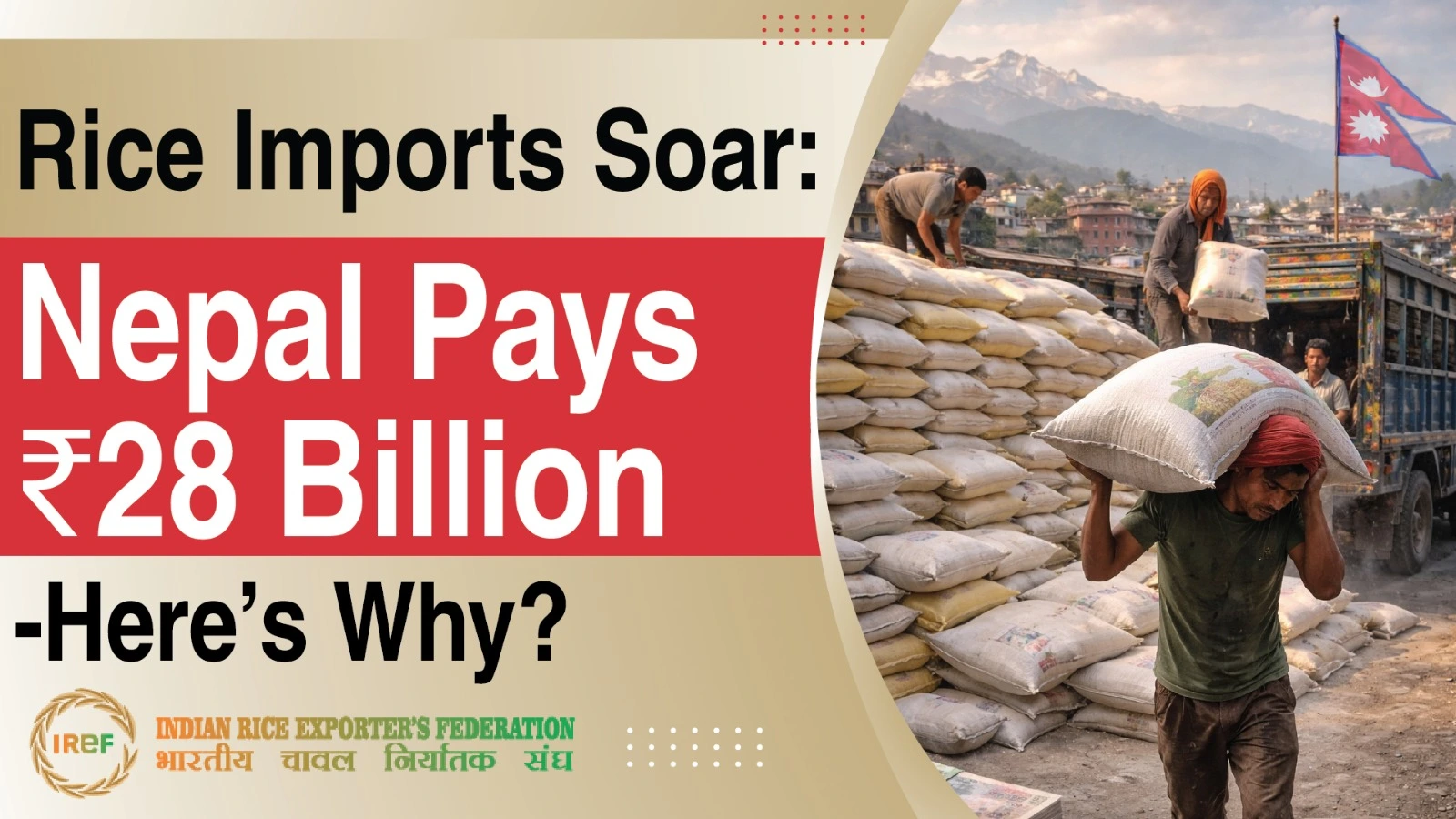
According to recent updates, Nepal rice imports have surged to ₹28 billion in the first eight months of the current fiscal year, underscoring a widening gap between domestic production and consumption. Once a rice-exporting nation, Nepal is now increasingly dependent on imports, primarily from India, raising concerns over long-term food security and economic vulnerability.
According to trade and agriculture estimates, the country imported nearly 384 million kilograms of paddy, 123 million kilograms of regular rice, and 51 million kilograms of basmati rice during this period. The total import bill has already reached ₹28 billion, and is expected to cross ₹40 billion by the end of the fiscal year. Interestingly, this marks a sharp rise compared to ₹21 billion in 2023–24, indicating that Nepal’s reliance on imported rice is accelerating.
Nepal rice imports driven by Structural Supply Gap
Nepal’s annual rice requirement is estimated at around 38–40 lakh metric tonnes. However, domestic production yields only about 35 lakh metric tonnes of rice, creating a consistent shortfall of 3–5 lakh metric tonnes. This gap is increasingly being filled through Nepal rice imports. Despite having fertile land, suitable climate, and a long tradition of rice cultivation, Nepal has been unable to bridge this deficit, pointing to deeper structural challenges in its agricultural system.
Why Production Is Falling Behind
Experts attribute Nepal’s growing dependence on rice imports to multiple long-term factors. Notably, shrinking farmland is one of the significant issues. Paddy cultivation area has declined from about 1.477 million hectares in 2003–04 to around 1.438 million hectares today. Large portions of agricultural land have been diverted to urban expansion and real estate development, and have also been affected by river erosion. Low productivity is another major concern. Nepal’s average paddy yield is around 3.8 tonnes per hectare—significantly lower than countries like China (6 tonnes), India (4.5 tonnes), and Vietnam (5.5 tonnes). Limited irrigation coverage, outdated seed varieties, irregular fertiliser supply, and low mechanisation continue to hold back output. Labour shortages have further weakened the sector. A large number of young people are migrating to Gulf countries, Malaysia, and India in search of employment, leaving agriculture increasingly dependent on an ageing workforce. At the same time, demand for rice is rising due to urbanisation and changing consumption patterns, further widening the supply-demand imbalance.
Nepal rice imports: Heavy Dependence on India
The sources the majority of its Nepal rice imports from India due to geographical proximity, an open border, and minimal trade barriers. However, this dependence carries strategic risks. In 2022 and again in 2024, India imposed restrictions on rice exports to control domestic inflation. These measures had an immediate impact on Nepal, leading to supply disruptions and price increases. Such episodes highlight the vulnerability of relying heavily on a single country for a staple food.
A Wider Global Pattern
Nepal’s situation reflects a broader trend seen in various countries that have gradually shifted from food self-sufficiency to import dependence. Nations such as Sri Lanka, Yemen, and Haiti have faced similar challenges, where declining agricultural investment, policy gaps, and external shocks have weakened domestic food systems. In a global environment marked by supply chain disruptions and geopolitical tensions, such dependence can quickly turn into a serious economic and social risk.
Conclusion
Nepal’s transformation from a rice exporter to a major importer has been gradual but significant. It is the result of declining agricultural investment, shrinking farmland, low productivity, and demographic shifts. Today, the country is spending billions on imports while becoming increasingly dependent on external suppliers. For India, this presents both an opportunity and a responsibility. Rising demand in Nepal could open up stable export channels, including structured government-to-government agreements. However, excessive dependence of a neighbouring country on food imports also raises concerns about long-term regional stability. Food sovereignty remains one of the most critical pillars of national strength. As Nepal’s case shows, once that foundation weakens, the consequences extend far beyond agriculture.
Share this article
Article Info
Read Time
4 min read
Published
24 Mar 2026
Author
Megha Bajaj
Category
News