Loss of Farmland in Kashmir Deepens Dependence on External Rice Supplies
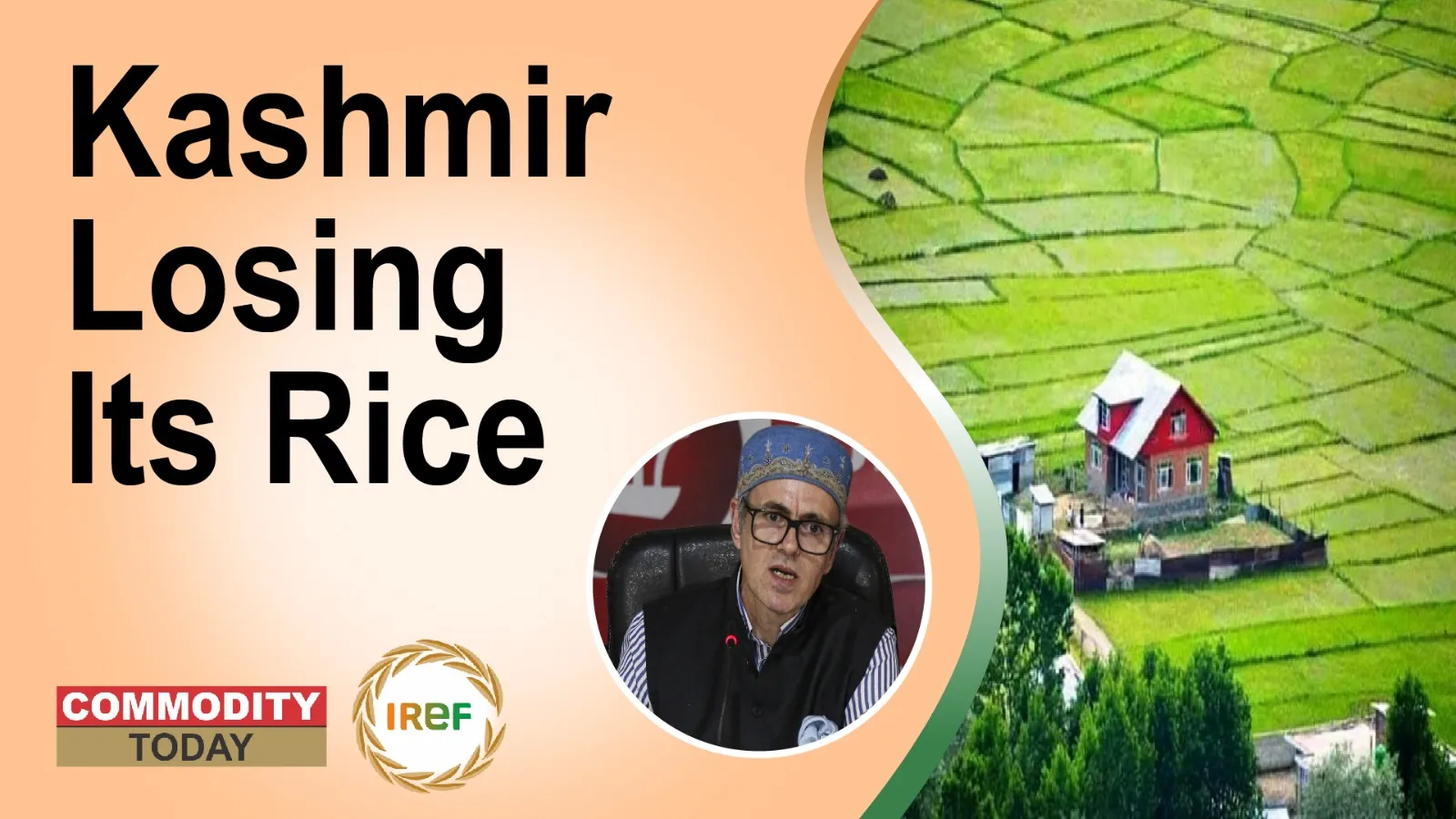
The rapid loss of farmland in Kashmir is sharply impacting the food security of the state. The latest Kashmir news about the continuous conversion of agricultural land into residential colonies, commercial structures, orchards and other non-farm uses has raised food security concerns for the residents of the state. It has further pushed the region into growing dependence on rice imports and other food grains sourced from outside J&K.
Loss of Farmland in J&K is Alarming
Official figures reveal that the loss of farmland is alarming and unsustainable with the state losing nearly 34,000 hectares of cultivable land between 1996 and 2023. The shrinking land bank has drastically reduced local crop production at a time when population growth and consumption demands are steadily rising. The report further stressed on the food shortage in the region depicting that the state produces only 0.45 million tonnes of food grains against a need of 1.34 million tonnes, leaving a deficit of 0.89 million tonnes. Official estimates warn the shortfall could hit 36 per cent by next year and cross 50 per cent by 2030. Farmers across the Valley say they have watched their fertile paddy fields vanish year after year.
In this context, and agricultural economist said that agricultural land conversion is taking away the food self-sufficiency of Kashmir leading to food shortage across the region. Officials in the Agriculture Department acknowledge that rapid urbanisation has contributed significantly to the loss of farmland. Experts, farmers, and civil society groups in this context, called for stringent actions to curb the cases of land conversion across the state.
Share this article
Article Info
Read Time
2 min read
Published
15 Dec 2025
Author
Megha Bajaj
Category
News