India’s Rice Exports Jumped 19% in 2025: Here’s Why?
India’s Rice Exports Jumped 19% in 2025: Here’s Why?
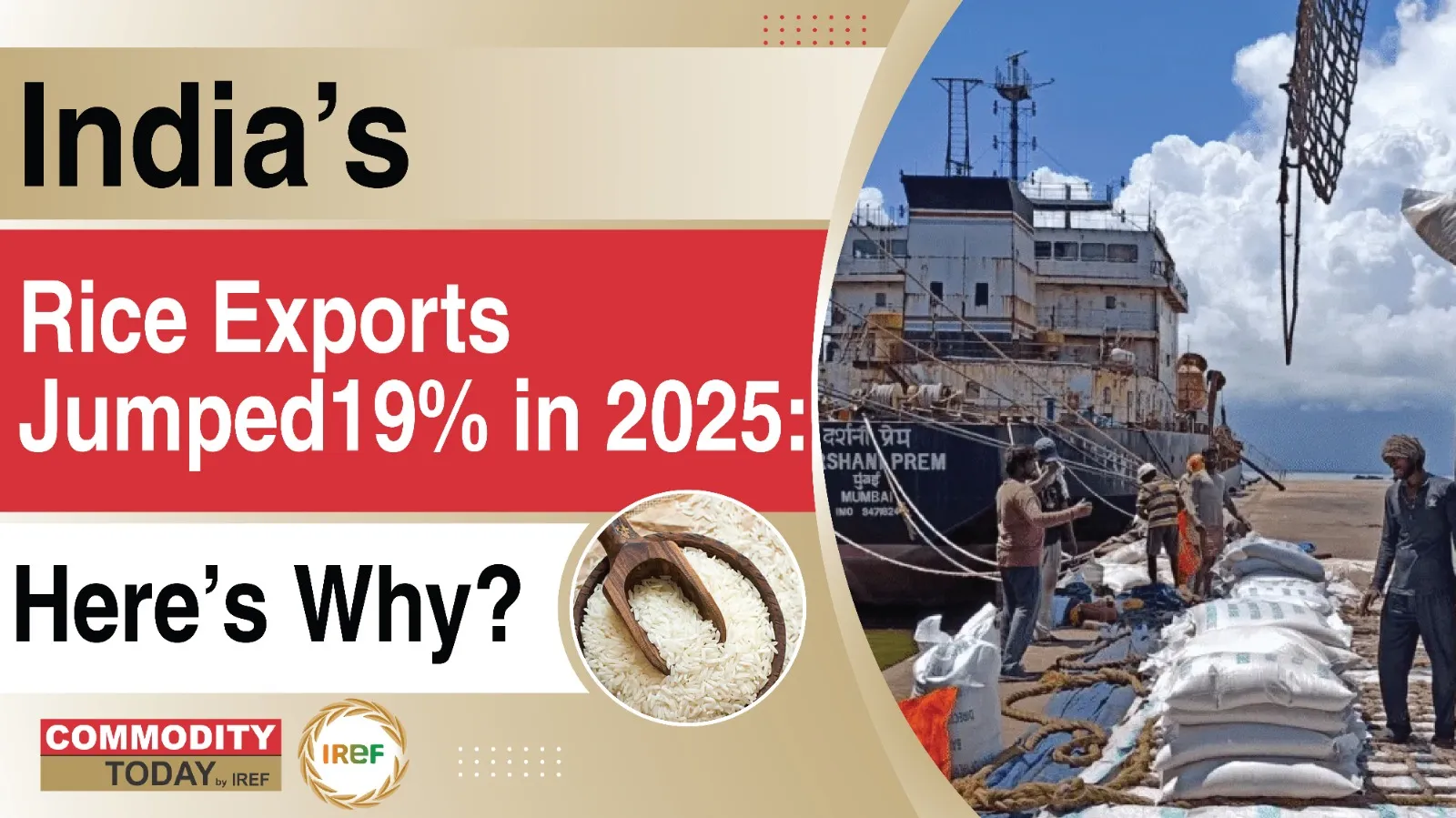
India's rice exports surged in the past year, 2025, as the government lifted all export restrictions imposed in 2022-2023. Total rice exports increased by 19.4 per cent to 21.55 million metric tons, the second-highest level ever, very close to the record 22.3 million tons in 2022.
What’s the reason behind the Surge in Rice Exports?
The main reason is record rice production that which was 150.18 million tons of rice, surpassing China to become the world's largest rice producer. With surplus stock in government warehouses, the government began lifting restrictions from March 2025 – all barriers, including the ban on non-basmati rice and minimum export price requirements, were removed. This made Indian rice much cheaper and more competitive in the global market. Non-basmati rice exports increased by 25 per cent to 15.15 million tons, while basmati rice exports rose by 8 per cent to a record 6.4 million tons.
Which markets witness growth?
Non-basmati rice exports primarily surged to African and neighbouring countries such as Bangladesh, Benin, Cameroon, Ivory Coast, and Djibouti. In basmati rice, premium markets such as Iran, the UAE, and the UK increased their purchases. Overall, India remains the world's largest rice exporter. The country’s exports exceed the combined exports of our neighbouring exporters, Thailand, Vietnam, and Pakistan.
This surge has led to a decline in rice exports from Thailand and Vietnam, and rice prices in Asia have fallen to their lowest levels in almost a decade, providing significant relief to consumers in Africa and other poorer regions.
Notably, the impact is overwhelmingly positive. For farmers, better rice prices and increased rice exports will boost incomes, especially in Punjab, Haryana, and other rice-producing states. For MSME exporters, who are benefiting from cheaper credit through recent government schemes, this is a golden opportunity. Processing units, millers, and exporters are receiving new orders. This news brings balance amidst the crisis of ₹2,000 crore worth of basmati rice stocks stuck in Iran, as demand is increasing in other markets. Globally, this strengthens India's food power status. Thus, India is emerging as a country that provides food security.
Consequently, this is a huge boost for rice exporters. Lower prices have increased volume, but profit margins need to be monitored. The target for 2025-26 is even bigger, according to some reports, it could reach 30 million tonnes. But there are also risks; low global prices could affect farmers' income if domestic rice prices also fall. Additionally, water scarcity and sustainability need to be addressed. Concludingly, this news demonstrates the success of India's agricultural policy. Initially, restrictions were imposed to control domestic prices, and now, with increased production, exports have been opened up, indicating a smart balance that benefits farmers, consumers, and exporters alike. The government should now develop a long-term strategy of strengthening buffer stock management so that sudden bans are not necessary in the future. Apparently, this is a game-changer for the agri-export sector and proves a strong position amidst competition from countries such as Pakistan. Undoubtedly, these reports show that India's rice sector is rapidly advancing.
Share this article
Article Info
Read Time
3 min read
Published
13 Jan 2026
Author
Megha Bajaj
Category
News