India, New Zealand Finalise Free Trade Agreement to Boost Trade, Investment and Strategic Ties
India, New Zealand Finalise Free Trade Agreement to Boost Trade, Investment and Strategic Ties
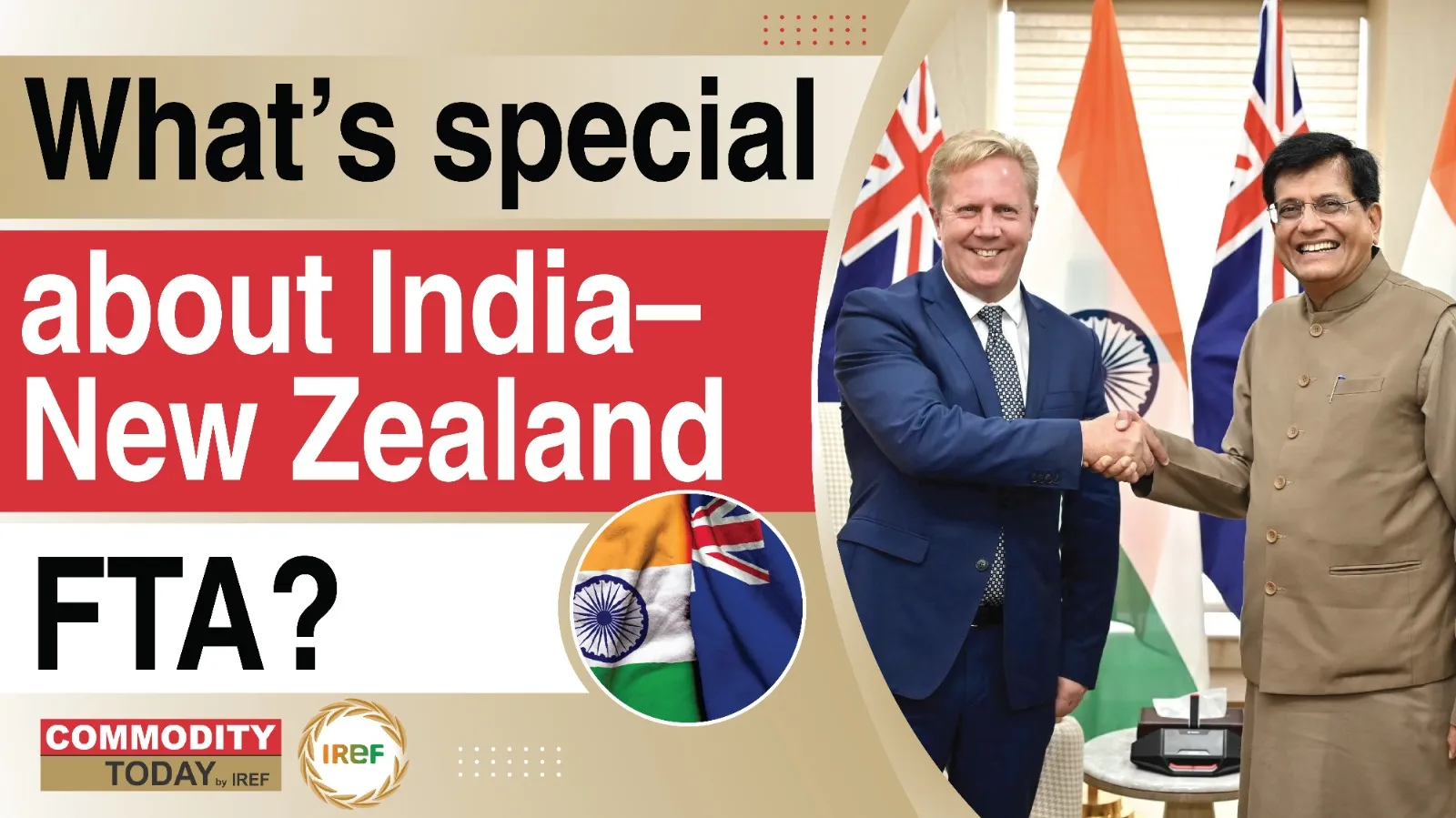
In a significant step towards boosting bilateral economic and strategic ties, India and New Zealand finalised a Free Trade Agreement (FTA) on Monday, December 22. PM Narendra Modi held a telephonic conversation with his New Zealand PM Christopher Luxon, during which the two leaders jointly declared the conclusion of what they described as a historic, ambitious and mutually beneficial Free Trade Agreement (FTA). Notably, talks for the India, New Zealand Free Trade Agreement (FTA) were commenced during Prime Minister Luxon’s visit to India in March this year. The leaders of both nations stated that the agreement’s completion in a record nine months indicated a strong political will and a shared ambition to strengthen the engagement between the two nations.
India-New Zealand Free Trade Agreement (FTA) to enhance market access
According to them, the FTA will improve bilateral economic cooperation by enhancing market access, boosting investment flows and deepening the strategic cooperation, while creating new opportunities for innovators, entrepreneurs, farmers, micro, small and medium enterprises, students and youth in both countries in multiple sectors. Interestingly, both nations expressed confidence in doubling bilateral trade over the next five years and projected investments of about $20 billion from New Zealand into India over the next 15 years by building on the momentum of the agreement. In addition, Indian PM Modi and New Zealand PM Christopher Luxon welcomed progress in cooperation in sectors like sports, education and people-to-people ties, and reinstated their commitment to further boosting the India–New Zealand partnership, assenting to maintain a close contact as the relationship moves into a new phase following the FTA’s conclusion.
Explainer: India Inks A Free Trade Agreement with Oman. Here’s All You Need to Know
New Zealand to discard 100% tariffs under FTA
Under the India, New Zealand Free Trade Agreement (FTA), New Zealand will discard tariffs on 100 per cent of its tariff lines, granting duty-free market access for all Indian exports. It's a move expected to significantly enhance India’s export competitiveness and improve its integration into global value chains. Additionally, India will provide tariff liberalisation in 70 per cent oftariff lines, covering 95 per cent of bilateral trade. The agreement is among India’s fastest-concluded Free Trade Agreements and conforms to the vision of Viksit Bharat 2047. With 100 per cent duty-free access, labour-intensive sectors such as textiles, apparel, leather, footwear, marine products, gems and jewellery, handicrafts, engineering goods and automobiles are expected to witness a sharp increase in exports, directly benefiting workers, artisans, women, youth and MSMEs via deeper integration into international value chains. However, market access excludes dairy, coffee, milk, cream, cheese, yoghurts, whey, caseins, onions, sugar, spices, edible oils and rubber to protect farmers and the domestic industry.
Share this article
Article Info
Read Time
3 min read
Published
23 Dec 2025
Author
Megha Bajaj
Category
News