Crisis in Khandwa, MP: Cotton Crops are under threat!
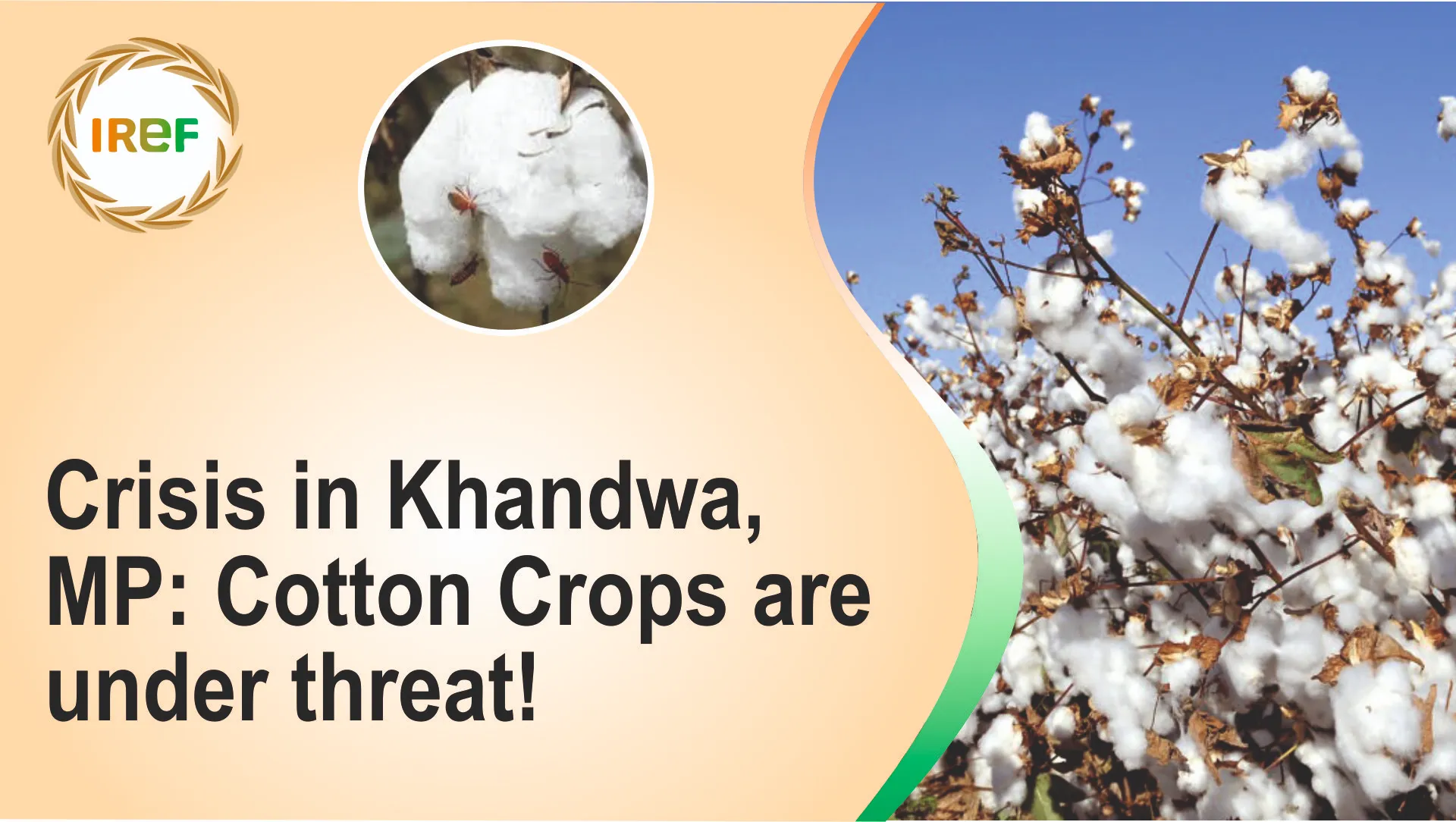
Currently, farmers are working on Cotton Crops on a large scale in Madhya Pradesh’s Khandwa district. The flourishing cotton crop on thousands of acres is the result of the farmers’ laborious efforts and their year-round efforts. However, the weather and pests have raised the concerns of the farmers this time. The outbreak of cotton crop disease called Mahua and Tela is spreading rapidly on the cotton crops, affecting the quality of cotton, and posing a risk of a decline in production. Sunil Patel, an agricultural expert of Jai Kisan Krishi Clinic, Khandwa, shared comprehensive information and advised the farmers to remain vigilant this time.
What does the Agri expert say about Cotton Crops?
According to an agricultural expert, Sunil Patel, Cotton crop diseases caused by insects such as aphids, jassids and thrips have been observed on the cotton crops due to high temperatures in the area and a lack of moisture in the weather this time. They are also called teliya in the local language. Due to the attack of these insects, a light oil-like layer is deposited on the cotton leaves. The leaves become sticky, and their colour starts appearing yellowish. Remaining untreatable for a longer time, the photosynthesis capacity of the leaves decreases, which affects the growth of the plant and the number of flowers. Furthermore, Patel says that if the treatment is not done on time, the production of the cotton crop can decrease by 20 to 30 per cent, and the quality of the fibre can also be weakened.
Advise to Farmers of Cotton Crops
Agriculture expert Sunil Patel advised farmers to adopt the following measures to prevent these pests and diseases -
1. Spray Imidacloprid 75% WG - 10 grams per pump.
2. Spray Chloropyrifos 50% + Cypermethrin 5% - 30 ml per pump by mixing it with Imidacloprid.
3. Alternatively, Difethuron 47.8% SC can also be sprayed by mixing Chloropyrifos + Cypermethrin at 30 ml per pump.
4. Use a silicone base sticker while spraying, so that the medicine can stick well to the leaves and the effect remains for a long time.
In addition, he says that if farmers spray with the right dose and adequate amount of water, then about 90 to 95 percent control can be achieved on these diseases and pests.
Cotton Crops Management: Significance of timely treatment
Insect attacking on cotton crop can suddenly intensify, especially when the temperature is high and rainfall is low. In such a situation, farmers should regularly monitor the field and start treatment as soon as the initial symptoms appear in their crops. The delay increases the number of pests rapidly, which also decrease the effect of medicines. Subsequently, monitoring the crops for 7 to 10 days and spraying again if required.
Advice for farmers Agriculture expert Sunil Patel advised farmers to adopt natural methods of crop management along with chemical treatment and keep the field clean and control weeds. He recommends following crop rotation so that pest attacks do not recur. Moreover, he suggests using balanced fertilisers and avoiding giving excess nitrogen, as it can increase pest attacks.
Furthermore, he emphasised that Cotton cultivation is a significant source of income for farmers, but cotton crop diseases such as Mahua and Tela can severely affect the production of cotton crops. Timely identification and treatment at the right time could save the production and quality of the crops.
Share this article
Article Info
Read Time
3 min read
Published
11 Aug 2025
Author
Megha Bajaj
Category
News