Apple Import Duty Reduced Under India-New Zealand Free Trade Agreement Sparks AFFAI’s Criticism
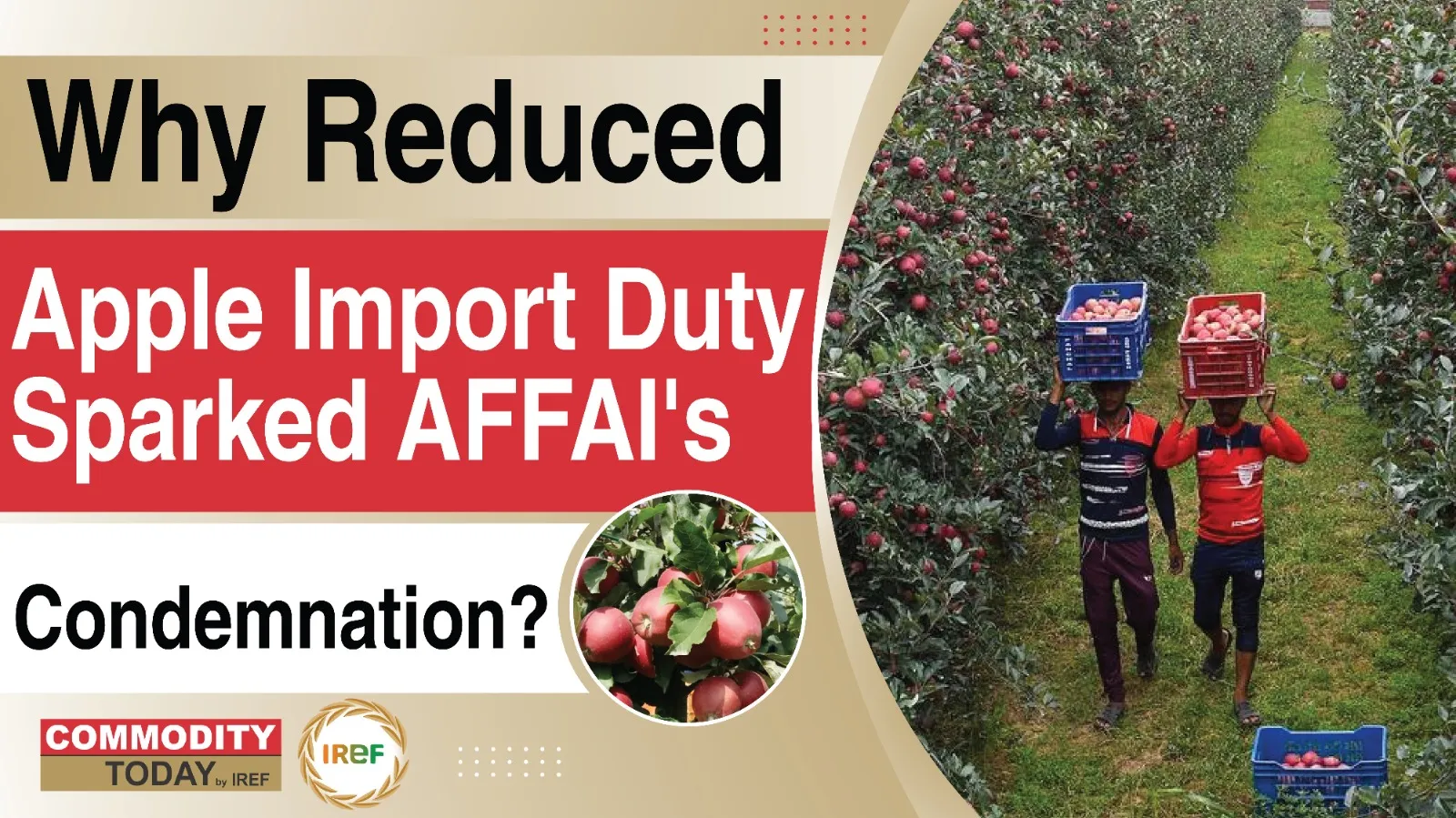
Apple Import Duty Reduced Under India-New Zealand Free Trade Agreement Sparks AFFAI’s Criticism
The Apple Farmers Federation of India (AFFI) has strongly condemned the reduction of import duty on apples from 50 per cent to 25 per cent under the India-New Zealand Free Trade Agreement (FTA). The organisation has urged the central government to protect the interests of apple farmers and immediately reinstate the previously applicable 50 per cent import duty on apples from New Zealand.
Free Trade Agreement could damage to Horticulture
Under the Free Trade Agreement, a certain quantity of apples will be allowed to be imported at highly concessional rates. According to the New Zealand Ministry of Trade, New Zealand has become the first country to receive tariff concessions on apples in any free trade agreement with India. Similarly, a Tariff Rate Quota (TRQ) system has also been agreed upon for honey, kiwis, and albumin. In its statement, Apple Farmers Federation of India (AFFI) said that this decision is a direct attack on the livelihoods of apple farmers across the country. The organisation has appealed to farmers in apple-producing villages to protest against this move. Apple Farmers Federation of India (AFFI) states that the Free Trade Agreement, which the government is presenting as a major diplomatic and trade victory, will cause serious damage to the horticulture sector. Horticulture contributes approximately 30 percent to agricultural GDP, and apples are a high-value crop, a crucial source of income for farmers in Jammu and Kashmir, Himachal Pradesh, Uttarakhand, as well as northeastern states like Arunachal Pradesh, Sikkim, and Meghalaya.
Increased Imports and Stagnant Exports
According to the organization, apple imports from the US, Turkey, Iran, New Zealand, and Afghanistan have increased rapidly over the past two decades. In the last 25 years, apple imports have increased from 0.2 lakh metric tons to 6 lakh metric tons, rising from 1.7 percent to 22.5 percent of domestic production. In contrast, India's apple exports have remained almost stagnant and are currently around 21,700 metric tons, which is even lower than the 2004-05 level. The demand was to increase the import duty. AFFI stated that Jammu and Kashmir and Himachal Pradesh, which account for approximately 90 percent of the country's total annual apple production of 2.6 million metric tons, are already grappling with natural disasters and adverse weather conditions. In this context, farmers had long been demanding that the basic import duty be increased to 100 percent. However, instead, the government reduced the duty, prioritizing the interests of New Zealand, which could prove detrimental to domestic apple farmers.
Share this article
Article Info
Read Time
3 min read
Published
25 Dec 2025
Author
Megha Bajaj
Category
News